


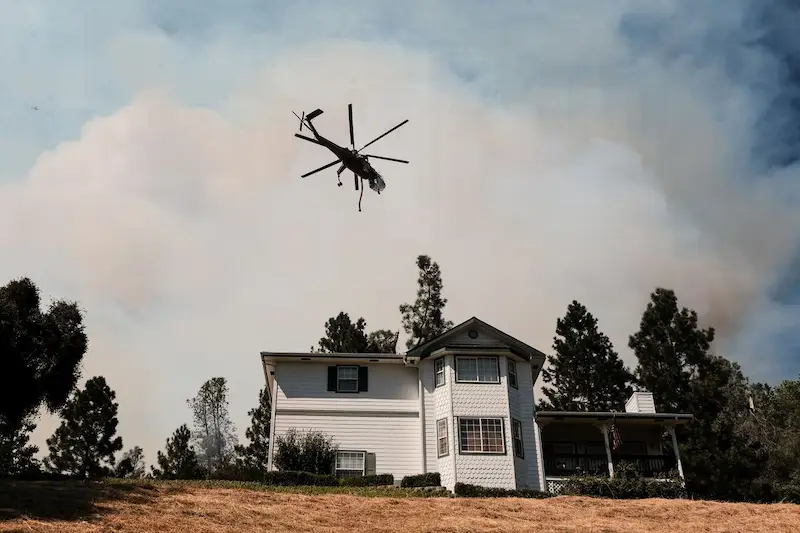


Climate change is confronting Californians with a dual threat of extreme heat and wildfire smoke, according to a recent study published in the journal Science Advances. This study reveals that individuals exposed to both high temperatures and smoke on the same day face a higher risk of hospitalization for cardiorespiratory ailments compared to those facing either hazard alone. The research highlights the urgent need to develop strategies that address the combined effects of heat and smoke, particularly in low-income communities of color that are disproportionately vulnerable to climate-driven health risks.
The study, conducted by scientists from the Scripps Institution of Oceanography at the University of California, San Diego, and the University of California, Los Angeles, analyzed satellite and monitoring data from 995 zip codes, encompassing nearly 67% of the state's population. The researchers obtained data on the occurrence of excessive heat, wildfire smoke, or both in those areas between 2006 and 2019. They then correlated this information with state records detailing hospitalizations for cardiorespiratory conditions in the affected communities.
The analysis revealed that hospitalizations on days when extreme heat and wildfire smoke coincided surpassed the combined hospitalizations from days with either hazard individually. Zip codes at a higher risk of exposure tended to be concentrated in the northern mountains and the Central Valley, areas prone to frequent forest fires. However, the impact of heat and smoke varied across the state due to its diverse geography and vast wealth disparity.
Communities that faced greater exposure risks were found to have fewer educational opportunities, a higher proportion of minority populations, and lower incomes. These neighborhoods typically had higher population densities and less tree cover, intensifying the urban heat island effect. Additionally, many residents in these areas lacked air conditioning or faced prohibitively expensive electricity rates, making it challenging to mitigate the adverse effects of heat and smoke indoors.
The study emphasizes the importance of coordinated efforts by policymakers and government officials to establish early-warning systems for heat and smoke events. Additionally, it calls for targeted relief efforts to support disadvantaged communities. Measures such as setting up shelters that serve as both cooling centers and clean-air spaces could provide respite during extreme weather events. The findings underscore the imperative of addressing environmental justice concerns associated with the compounded impacts of heat waves and wildfires.
As climate change continues to exacerbate these hazards, Californians must prepare for a new reality in which extreme heat and wildfire events coincide. By recognizing the specific vulnerabilities faced by different communities, policymakers can work towards ensuring equitable adaptation strategies and safeguarding the health and wellbeing of all Californians.