


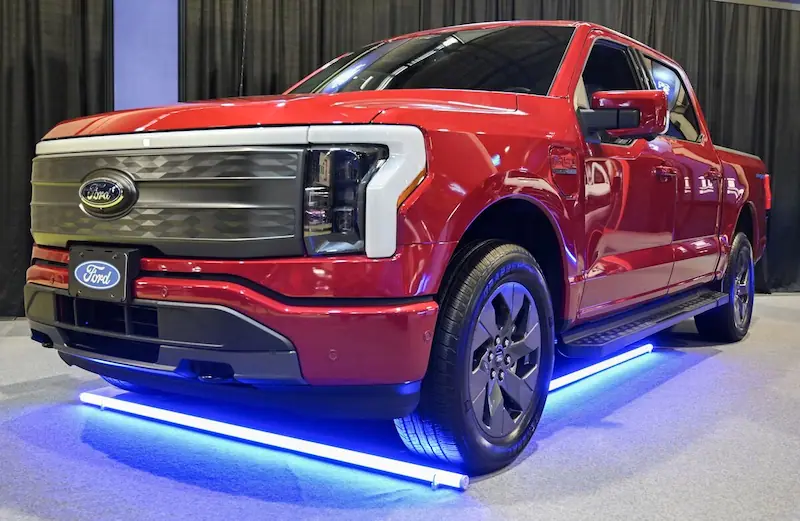


In a strategic move to accelerate the adoption of its electric vehicles (EVs) and bolster sales, Ford Motor Co. has announced that it will now offer its lineup of EVs through all 2,800 of its US dealerships. This decision marks a departure from the previous plan, which mandated dealers to make significant investments to qualify for selling models like the electric Mustang Mach-E and the F-150 Lightning plug-in pickup. Approximately half of Ford's retailers had agreed to the previous program, necessitating substantial financial commitments.
Marin Gjaja, the chief operating officer of Ford's EV unit, Model e, highlighted the company's rationale for this shift during a recent press briefing. Gjaja acknowledged a sluggish growth trajectory in EV sales and suggested that the automotive giant is now entering a critical phase. By making EVs available in all dealerships, Ford anticipates a surge in sales, citing broader geographic coverage and enhanced convenience for customers in terms of purchase and servicing locations.
This move stands as the latest adaptation in Ford's evolving EV strategy, characterized by a series of adjustments aimed at optimizing operations and financial performance. Recent actions include a significant reduction in spending on battery-powered models, streamlining EV factory capacity, delaying new vehicle releases, and implementing price reductions to stimulate demand.
The financial challenges associated with EV endeavors have not gone unnoticed, with Ford recording losses exceeding $100,000 per EV sold in the first quarter of this year - more than double the losses from the previous year. CEO Jim Farley has candidly acknowledged the significant financial burden posed by the EV unit, projecting potential losses of up to $5.5 billion for this year.
In light of these developments, Ford is discontinuing the requirement for dealers to install costly fast chargers at their facilities. Instead, dealers are now encouraged to invest in two Level 2 chargers, each priced at about $10,000. Dealers who had already met the criteria for the previous "certified elite" program spent an average of $600,000 on upgrades, undercutting the initial estimate of over $1 million.
By expanding the availability of EVs to all dealers nationwide, Ford aims to appeal to a broader base of mainstream consumers and facilitate the transition to electric mobility. Gjaja emphasized the evolving preferences of today's EV buyers, noting a shift towards practicality and usability over mere technological novelty and premium pricing. The automotive landscape is evolving rapidly, and Ford's revised EV strategy underscores a commitment to adapting to these changing dynamics in the pursuit of sustainable growth and market relevance.