


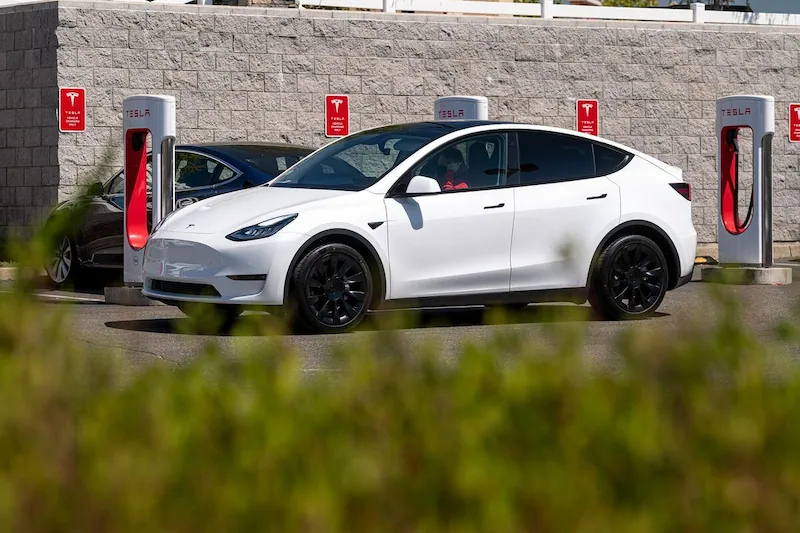


In a surprising turn of events, Tesla Inc. has lost its longstanding reputation as the top-quality electric vehicle (EV) manufacturer, as revealed by the latest J.D. Power Initial Quality Study for the 2024 model year. The study unveiled significant design changes on Tesla cars that have left owners scratching their heads in frustration, ultimately leading to a decline in the company's quality score.
Previously unrivaled in the EV market, Tesla now finds itself on a level playing field with competitors like Rivian Automotive Inc. and established automakers producing battery-powered models, such as General Motors Co. The study highlighted complaints from Tesla owners regarding perplexing alterations to fundamental functions, including window controls and the horn. Notably, Tesla made the unconventional decision to relocate the horn from the center of the steering wheel to a button on the spoke of the wheel in certain models. Additionally, the removal of turn-signal stalks in some models in favor of directional arrow buttons on the steering wheel's spoke has caused further dissatisfaction among Tesla drivers.
Frank Hanley, J.D. Power's senior director of auto benchmarking, expressed concerns over these design changes, emphasizing the potential safety implications. Hanley noted that customers have reported increased distraction and "eyes-off-the-road" time, particularly in emergency situations where immediate access to features like the horn is critical.
The study, which now includes data on dealership visits for repairs and advanced features like rear emergency braking, indicates that Tesla's quality standing has slipped in comparison to its industry peers. While Ram, the truck and van division of Stellantis NV, claimed the top spot in the rankings, Tesla and Rivian both registered 266 problems per 100 vehicles, underscoring the challenges faced by EV manufacturers in delivering flawless products. Notably, EVs as a whole exhibit lower quality metrics compared to traditional internal combustion engine vehicles due to the intricate technology integrated into these electric platforms.
Despite the overall industry average of 195 problems per 100 vehicles, GM emerged as a standout performer, securing multiple segment-leading accolades for models like the Chevy Equinox and the Chevy Silverado. Conversely, Ford Motor Co. faced a mixed bag, with its namesake brand surpassing the industry average in quality, while its Lincoln luxury line struggled due to issues with the Nautilus SUV produced in China for the US market.
Notably, Ford's popular F-150 pickup truck, a symbol of reliability, was omitted from this year's study due to additional quality checks conducted by the automaker. This absence highlighted Ford's efforts to enhance quality standards, particularly concerning the electric F-150 Lightning, which failed to meet expectations. With EV owners reporting higher rates of dealership visits for vehicle issues, the industry continues to grapple with the complex challenges of advancing automotive technology while maintaining product quality and customer satisfaction.