




Before the sun had even cracked the horizon on Friday, Dalton Rice laced up his running shoes and jogged along the Guadalupe River in Kerrville. It was quiet. Damp. Just a touch of drizzle in the air. He finished his run around 4 a.m. — just another early start for the city manager. But within an hour, his phone began to light up. Emergency after emergency. The Guadalupe had broken loose.
By 5 a.m., that sleepy river was a churning monster. According to officials, the water rose 26 feet in under an hour. Think about that — a surge taller than a two-story house, all in the time it takes to eat breakfast. It wasn't just a heavy rain. It was a deluge, walls of water barreling into campsites and RV parks packed with families enjoying the long weekend.
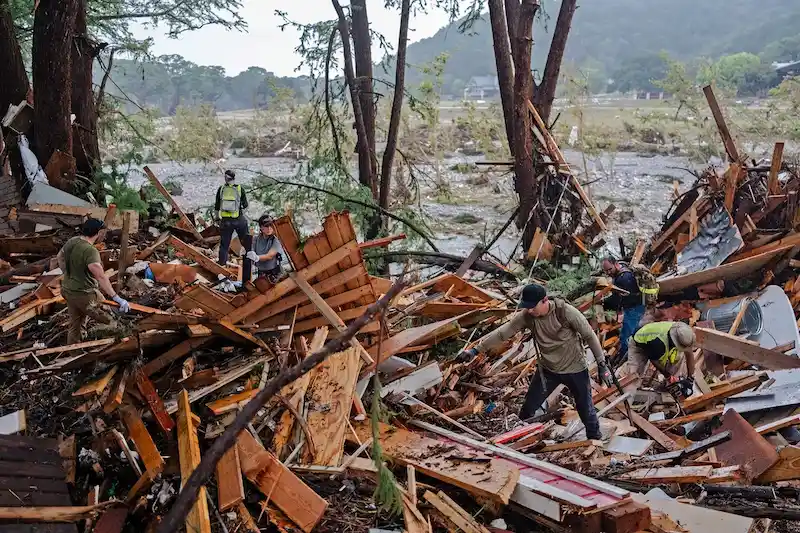
One of the hardest-hit spots was a summer camp for girls. Search crews, wading through mud and splintered wood, are still pulling survivors from wreckage. At least 70 people are confirmed dead. Dozens of kids are still unaccounted for. The river didn't just flood — it swallowed lives, homes, memories.
The sky, as if not finished, kept weeping over the weekend. And with every new burst of thunder and rain, the same questions started to echo louder: Were we prepared for this? Could this have been prevented?
Texas has been battling the elements nonstop lately. Hurricane Beryl knocked out power for millions. A storm with winds strong enough to pop out skyscraper windows tore through Houston. Wildfires torched the Panhandle. It’s like the state can’t catch its breath.
Scientists point to climate change — warmer oceans, wetter air, unpredictable storm patterns. Disasters aren't waiting anymore. They're arriving in packs, hitting harder, faster, with barely any warning.
That seems to be exactly what happened in Kerrville. Nim Kidd, head of the Texas Division of Emergency Management, said forecasts never predicted that amount of rainfall. Not even close. The National Weather Service had issued alerts — a flood watch Thursday afternoon, flash flood warnings by evening — but it wasn’t enough.
And now people are wondering: were those warnings too little, too late? Congressman Joaquin Castro raised concerns, pointing out staffing cuts at the National Weather Service. Fewer experts, fewer eyes on the radar. Maybe that slowed things down. Maybe it didn’t. But it’s a question worth asking.
The numbers are staggering. In Streeter, about 100 miles northwest of Austin, over 20 inches of rain fell. In Hext, 18 inches. That's more than some cities get in a year — dropped in a single night.
By dawn, floodwaters had carved paths through homes and left people stranded on rooftops. Some residents say their phones never buzzed with alerts. Others, like survivors interviewed by a local judge, got notifications early enough to flee. The inconsistency only adds to the confusion.
Homeland Security says federal help was on the ground even before the rain hit. But when a river swells 26 feet in 45 minutes, is there such a thing as fast enough?
Scientists are calling this a “1,000-year event.” In other words, it had a 0.1% chance of happening in any given year. But here’s the thing — we’ve been seeing more of these so-called “rare” events. Back-to-back disasters. Fire after fire, storm after storm. They're not rare anymore. They're becoming the rhythm.
Insurers are scrambling to keep up with claims. Texans are picking through what’s left of their homes — again. And still, the skies are not done. More rain is falling. More flood warnings are in place.
Rice, the city manager who went out jogging before the nightmare began, said recovery crews have switched to grid searches — meticulous, slow work, searching for bodies, for signs of life, for answers.
No one’s pretending this is over. No one’s pretending it’ll be easy. But there’s a real, growing feeling now in Texas — one storm too many has pushed things past a breaking point. And as the water recedes, the reckoning begins.