


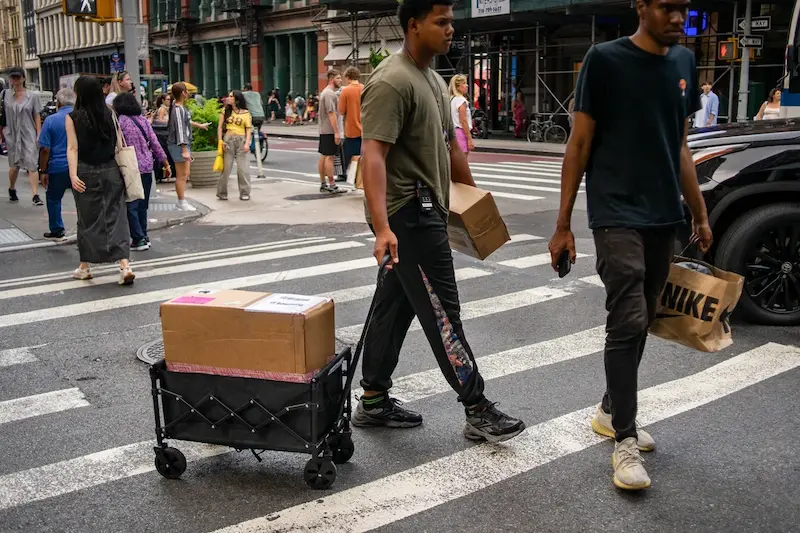


It didn’t happen all at once. There was no sudden jolt at the checkout line, no single news headline shouting that prices were about to take off. Instead, the change has been creeping in like a slow tide—barely noticeable at first, but now lapping at the toes of everyday shoppers. The latest data on US inflation gives the clearest hint yet: tariffs, those invisible taxes on imported goods, are starting to make their way into consumer prices.
That’s the uncomfortable takeaway from June’s inflation figures. While overall inflation remained relatively muted—thanks in part to a slide in vehicle prices—certain categories, particularly those reliant on imports, began showing telltale signs of pressure. It’s the kind of economic breadcrumb trail that’s easy to overlook, but policymakers at the Federal Reserve are paying attention. With their next big meeting just around the corner, the central bank’s officials are split. Are tariffs simply a passing bump in the road, or the start of a more stubborn climb in costs?
Meanwhile, over in China, the economic picture is painting its own kind of tension. On the surface, things look upbeat. A 5.2% growth in GDP for the second quarter exceeded expectations and nudged Beijing closer to its full-year goal. But peel back that layer, and the concerns start bubbling up. Exports may be strong, but domestic prices are sagging. There's a gnawing sense that the world's second-largest economy could be heading toward a deflationary rut if demand doesn’t bounce back soon.
It’s a strange moment globally. In the US, consumers are cautiously loosening their wallets again, with retail sales ticking up in June. Even auto sales, which had slumped for two months straight, showed a surprising rebound. But behind those gains is a fragile balancing act—businesses are starting to pass more of their costs onto customers, and that’s not a game anyone wins long-term.
Politics, as usual, complicates the picture. Former President Donald Trump, never one to avoid stirring the pot, lobbed another verbal grenade at Federal Reserve Chair Jerome Powell—this time, framing it as not firing him, which somehow landed like a veiled threat. Markets, already twitchy from uncertainty, flinched.
Elsewhere, the ripples from US trade policies are causing deeper shifts. A Bloomberg analysis suggests most of China’s industries are ill-equipped to withstand current tariff levels. With US duties hovering around 40%, and average industrial profit margins barely above 14%, that’s a dangerous gap. The fallout could be steeper price cuts, eroded profits, and even job losses if the pressure persists.
Europe isn’t faring much better. In Britain, the labor market is wobbling. Unemployment climbed to 4.7%—the highest in four years—and the number of people on payroll has dropped significantly since late 2024. Employers are feeling squeezed, especially after new tax burdens were introduced earlier this year.
In Germany, the story isn’t about tariffs as much as long-term structural issues. The country’s once-mighty export machine is sputtering. The Bundesbank now openly points fingers at deeper-rooted challenges within the German economy, not just trade tensions.
Back in Asia, the policy responses are beginning to diverge. Indonesia cut interest rates and hinted it's ready to do more. Australia, on the other hand, is wrestling with soft employment numbers—job growth in June was nearly non-existent, driven entirely by part-time gigs. Not exactly a signal of booming confidence.
Still, some bright spots persist. Switzerland, known more for its neutrality than economic surprises, saw a pickup in exports to the US, especially in pharmaceuticals. Companies like Novartis and Roche continue to ship billions in medications, unfazed—for now—by trade disruptions.
Amid all of this, investors are searching for shelter in unexpected places. With developed-market bonds underperforming due to debt concerns, emerging-market debt—particularly in parts of Asia—is drawing fresh interest. It's a curious reversal, the kind of move that suggests global financial nerves are fraying at the edges.
The bottom line? While inflation hasn’t spun out of control, the subtle forces shaping it are in motion. Tariffs are no longer just a political tool or a line in a trade agreement—they’re starting to show up in the aisles of your local store, in the price of your groceries, your furniture, even your electronics. Whether this is just a passing cloud or the start of a heavier storm is the question everyone’s quietly asking, even if no one has the answer just yet.