


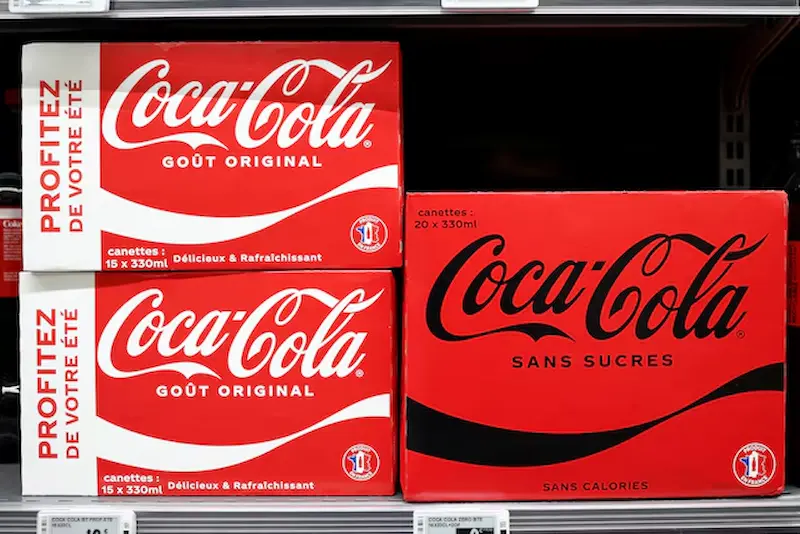


Coca-Cola just handed in its latest report card — and Wall Street liked what it saw, at least on paper. The soda giant managed to beat earnings estimates for the second quarter, even as the number of drinks sold slipped a little. How? One word: prices. The company has been steadily nudging prices upward, and those hikes are now doing the heavy lifting.
Here’s the thing though — while profits look good on the surface, there’s a more tangled story underneath. Volume, or the actual number of units sold, fell by 1%. That might not sound like much, but it’s the first dip after two quarters of growth, and the slowdown isn’t random. It hit in big, influential markets like India and Mexico. Even the U.S., where Coca-Cola has long been a dominant brand, saw a drop in Coke sales. That’s a red flag, especially when you’re raising prices.
Still, investors seemed reassured. Coca-Cola’s adjusted earnings came in at 87 cents per share, better than the 83 cents analysts had expected. Revenue also edged past forecasts, hitting $12.62 billion.
But the headlines this week weren’t just about money. They were also about sugar. Specifically, real cane sugar.
In an unexpected twist, Coca-Cola confirmed that it will launch a cane sugar–sweetened version of Coke in the U.S. It’s already sold in places like Mexico and can be found in specialty aisles here, often in nostalgic glass bottles. But this time, it’s going mainstream.
Why now? Part of it seems to be political. Health campaigns led by figures like Robert F. Kennedy Jr. are gaining traction, and former President Trump even claimed recently that Coca-Cola had agreed to switch to "real sugar" following White House pressure. CEO James Quincey didn’t quite confirm that connection but did say the company is exploring all sweetener options, responding to consumer tastes.
That doesn’t mean the change is easy — or cheap. Analysts are warning about rising production costs and supply chain headaches if Coke makes cane sugar a regular thing. Cane sugar costs more than high-fructose corn syrup, the sweetener Coca-Cola has used in the U.S. for decades. If they’re serious about making the switch at scale, prices could climb even higher, pushing more cost-conscious consumers away — especially in a time when inflation has already made everyday groceries feel more expensive.
It’s not the first bump the company’s hit this year. Earlier in 2025, Coke faced a wave of criticism and consumer backlash after a viral video claimed the company laid off Latino workers and reported them to ICE. Though no evidence surfaced to support the claim, it prompted a boycott in the U.S. and Mexico that dented sales among Hispanic communities. Now, executives say that damage has largely passed.
Still, there’s no denying that Coca-Cola is navigating tricky terrain. North American sales volumes are down. Global trade tensions and tariffs — especially aluminum duties now up to 50% — are making packaging more expensive. And while the company is trying to pivot toward affordable options like plastic bottles, higher material costs are squeezing margins.
Despite all this, Coca-Cola Zero Sugar is having a moment. It posted a 14% jump in global sales — not bad in a shaky economy. And the company is keeping its full-year earnings outlook on the sunny side, expecting to hit the higher end of its projected growth, partly thanks to a weaker U.S. dollar helping its international business.
In the markets, though, optimism had limits. Shares were down about 1% midday Tuesday, signaling that while Coca-Cola may be pulling off a balancing act for now, investors aren’t totally convinced it can keep it up forever.
So yes, Coca-Cola’s earnings beat expectations. But the real story might be what’s in the bottle — and whether Americans will drink to the taste (and cost) of the real thing.