


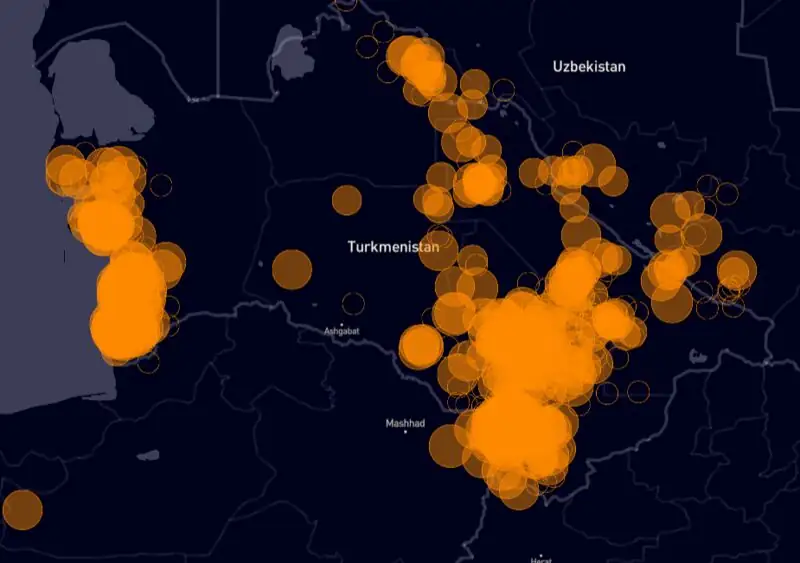


Turkmenistan, a significant emitter of methane, is in advanced talks with the US for a potential deal to reduce the country's vast methane emissions. Officials from the two countries are discussing the possibility of US providing financial and technical support to assist the central Asian state in plugging leaks that let planet-warming gas escape from its aging fossil fuel infrastructure. The negotiations have remained confidential, and the people familiar with discussions have requested anonymity. These people expressed confidence that a concrete agreement would be reached within months, and an announcement could be made before the United Nations COP28 climate summit starts in November.
Turkmenistan holds the world's fourth-largest natural gas reserves and is a potent source of methane emissions per unit of oil and gas output. Nearly 7% of Turkmenistan's gas is currently being lost due to leaks, according to estimates by the International Energy Agency and the World Bank. If all the gas that's leaked or vented by Turkmenistan's energy sector was combusted instead, the global warming impact would be significantly reduced. Bloomberg Green estimates that if all the lost gas is salvaged and burned, it would have a similar effect as wiping out approximately 92 million tons of CO2 each year, more than double the total amount of carbon that can be captured from smokestacks globally.
Methane is considered a potent greenhouse gas that traps over 80 times more heat than carbon dioxide in the first two decades in the atmosphere. Hence, many countries are considering reducing methane emissions as a quick and relatively easy fix to curb global warming.
The potential deal between the US and Turkmenistan could become a diplomatic coup for President Joe Biden and have far-reaching benefits for global climate change efforts. The US and European Union made methane a top issue ahead of COP26 in 2021, with nearly 150 nations joining the global pledge to reduce global emissions by 30% by the end of the decade. However, the focus has now shifted beyond rallying more nations behind the initiative to taking action on the ground.
While the deal with Turkmenistan is geopolitically challenging, it could trigger bespoke arrangements with other countries that emit significant amounts of methane. If the two countries reach an agreement, Turkmenistan could recover as much as 5.8 billion cubic meters of gas, a welcome boost for the global supply at a time when Russia's invasion of Ukraine has created a significant shortage. The US oilfield service giants, Halliburton Co. and SLB, formerly named Schlumberger, could benefit from the deal by helping to track down leaks and replace obsolete equipment. The US Export-Import Bank is a potential source of funding for the deal, and it could also lure philanthropic and public funding as part of the $200 million methane finance sprint the US unveiled in April.
The Turkmenistan package could potentially serve as a model for bespoke deals focused on methane, just like the multibillion-dollar energy transition partnerships that help South Africa, Indonesia, and Vietnam move away from coal-fired power. This move could also spur other countries such as Algeria to follow suit in addressing their methane emissions. The real value and progress in reducing emissions would come from turning the pledges into actual projects with real dollar figures, said Jonathan Banks, global director of methane pollution prevention for the Clean Air Task Force.