


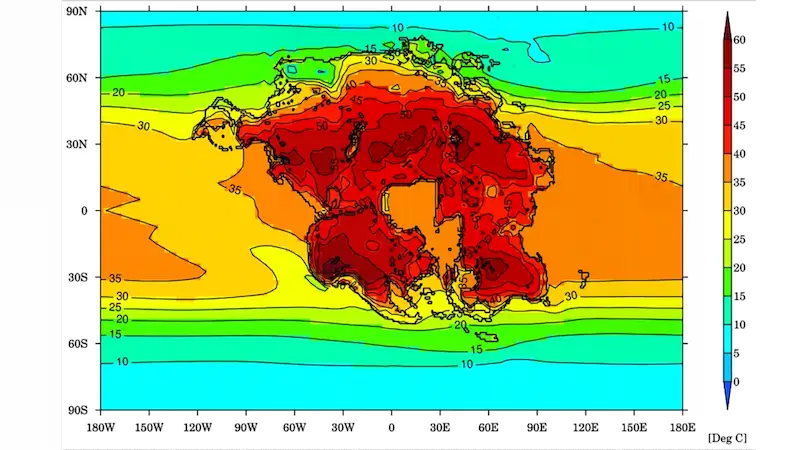


Scientists have recently predicted that the formation of a new "supercontinent" in approximately 250 million years could result in the extinction of humans and other mammals. Using advanced supercomputer climate models, researchers from the University of Bristol simulated the future climate conditions on this supercontinent, known as Pangea Ultima. The findings were rather grim, as the climate was predicted to be extremely hot, dry, and essentially uninhabitable for species, including humans, that are not adapted to prolonged exposure to extreme heat.
The models revealed that once Pangea Ultima forms, there will be an increase in volcanic activity, releasing large amounts of carbon dioxide into the atmosphere and leading to further global warming. Moreover, the brightness of the sun will intensify, emitting more energy and exacerbating the warming effect. Alexander Farnsworth, the lead author of the paper, described this combination as a "triple whammy" that would result in widespread temperatures of 40 to 50 degrees Celsius (104 to 122 degrees Fahrenheit) and extreme humidity. In such conditions, the inability of humans and other mammals to regulate body heat through sweating would ultimately lead to their demise.
The researchers estimated that only 8% to 16% of land on the supercontinent would be habitable for mammals, leaving the majority of species without sufficient food or water sources. Although there are uncertainties in making predictions so far into the future, the authors emphasized the urgency of addressing the current climate crisis. If humans continue to emit greenhouse gases through the burning of fossil fuels, the predicted carbon dioxide levels in 250 million years could become a reality much sooner.
The catastrophic outlook presented by this study should serve as a wake-up call to take immediate action in tackling the ongoing climate crisis. It is crucial to recognize that human-caused climate change is already causing significant harm, resulting in millions of deaths worldwide each year. Eunice Lo, a co-author of the report, stressed the importance of achieving net-zero emissions as soon as possible. While the predicted uninhabitable planet is still millions of years away, extreme heat and its detrimental effects on human health are already being experienced today.
This study aligns with the warnings provided by a major UN-backed report published last year, which highlighted that global warming has the potential to transform life on Earth, posing threats to billions of people and other species. To avoid catastrophic changes, it is crucial to limit global warming to below 1.5 degrees Celsius above pre-industrial levels. Urgent action is needed to reduce our reliance on fossil fuels and prevent irreversible damage to our planet. Failure to do so could result in a mass extinction event, similar to the one that wiped out the dinosaurs and other species millions of years ago.