


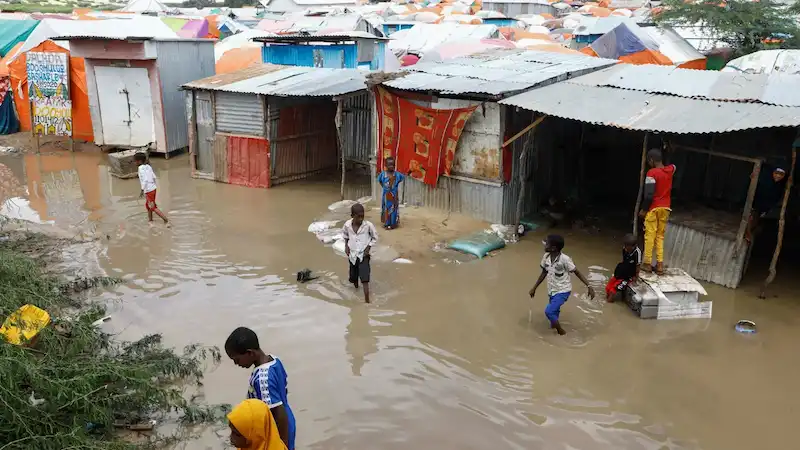


Torrential rains and flash floods have wreaked havoc across East Africa, leaving a trail of destruction and claiming the lives of over 350 people. Somalia, Kenya, Ethiopia, and Tanzania have all been severely affected, with more than 1 million individuals displaced due to the ongoing disaster.
In Kenya alone, the death toll stands at 136, and nearly half a million people have been forced to flee their homes, as reported by the Interior Ministry. Since October, incessant rains have battered 38 out of the country's 47 counties, leading to flash floods, widespread flooding, and devastating mudslides. President William Ruto disclosed in an emergency cabinet meeting last week that the northeastern regions and the eastern coast have suffered the most, witnessing extensive damage to infrastructure and homes. The disruptions even extended to cargo rail services from the strategic port of Mombasa.
These extraordinary heavy rains are primarily attributed to the El Niño weather phenomenon, which originates in the Pacific Ocean along the equator and influences global weather patterns. In Eastern Africa, El Niño has historically been associated with severe flooding, resulting in landslides, increased waterborne diseases, and food shortages. Simultaneously, the northern and southern parts of the continent usually endure extended periods of drought during El Niño events.
However, the Horn of Africa, where these devastating floods have hit hardest, is also one of the most vulnerable regions to climate change. Despite the projected decrease in annual rainfall in the area as the Earth warms, climate scientists anticipate an increase in the frequency and intensity of heavy rainfall events. Consequently, the region can expect more droughts alongside the increased risk of devastating floods.
In response to the crisis, President Ruto has activated the National Disaster Operation Center to coordinate emergency response efforts. Moreover, the Interior Ministry announced a decline in rainfall in northern Kenya this week, raising hopes for some respite.
Addressing the urgency of climate change at COP28 in Dubai, President Ruto highlighted the harsh reality of climate change and the immediate devastation witnessed through these catastrophic rains. He emphasized that developing countries, like the Horn of Africa, bear the brunt of climate change impacts.
The current flooding crisis follows a severe drought that afflicted the region just a few months ago—the worst drought experienced in four decades. Abdulkadir Afi, Director of Communication for the Somali Red Cross, noted the perpetual suffering of communities, who face the stress of both water scarcity and excessive water.
The toll of the floods in Somalia and Ethiopia stands at 110 and 57 deaths, respectively, according to the United Nations' humanitarian agency, OCHA. In Tanzania's Manyara province, heavy rains triggered floods and mudslides, leading to the loss of at least 49 lives and leaving 85 individuals injured. Responding to the disaster, Tanzania's President Samia Suluhu Hassan directed response agencies to provide assistance, rescue affected individuals, and prevent further disasters.
In Kenya's Dadaab Refugee Camp, which houses around 300,000 refugees, the deluge has caused widespread devastation. Over the past three years, the camp has experienced a significant influx of new arrivals, many seeking refuge from food insecurity and drought conditions in Somalia. In November, a portion of the camp was submerged, displacing approximately 20,000 people. These individuals have sought shelter in schools and places of worship while relief efforts struggle to reach the most affected areas due to damaged and inaccessible roads.
Aid organizations have reported an alarming increase in waterborne diseases, such as cholera and acute watery diarrhea, due to damaged sanitation facilities and limited access to safe drinking water. The International Rescue Committee (IRC) has found it challenging to provide food, clean water, and medical aid to those in dire need, as damaged roads impede relief efforts.
The severe flooding and its devastating consequences are a stark reminder of the disproportionate impact climate change has on vulnerable regions. Urgent action, solidarity, and inclusivity are essential in addressing this devastating crisis and its implications for the future.