


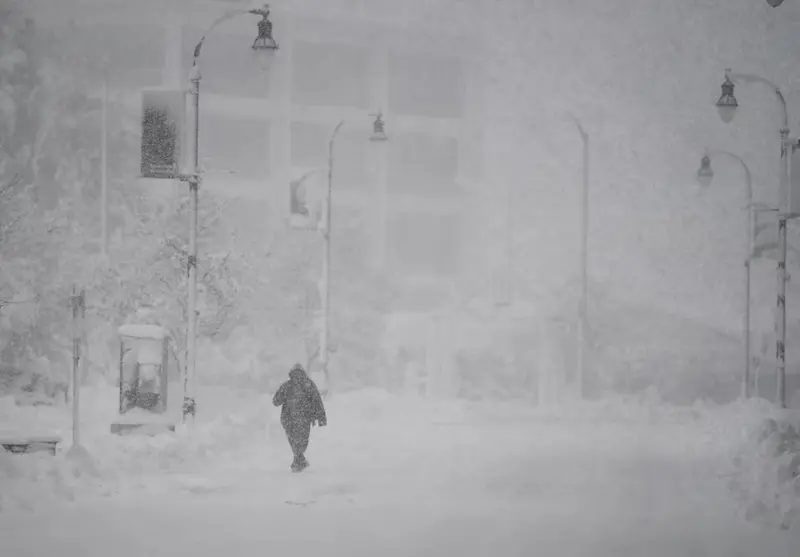


The United States is bracing itself for an extreme cold spell that is expected to bring record demand for natural gas while simultaneously disrupting supplies due to frozen wells. As a result, natural gas and power prices have skyrocketed to multi-year highs, raising concerns about potential strain on power systems in vulnerable areas. Past winter storms have exposed the vulnerability of power plants that lacked sufficient fuel to operate, leading to widespread damage and power outages.
According to reports from financial firm LSEG, US gas output is projected to decline by 3.4% in the past five days, reaching a 10-week low of 104.5 billion cubic feet per day (bcfd) on Friday. While this decline is relatively modest compared to the supply losses experienced during previous winter storms, it comes as gas demand, including exports, is on track to reach unprecedented levels of 165.9 bcfd on January 15, 174.3 bcfd on January 16, and 172.9 bcfd on January 17, according to LSEG.
These forecasted daily demand figures would surpass the previous all-time high of 162.5 bcfd set in December 2022. Consequently, natural gas supply constraints coupled with surging demand have caused prices to surge to alarming levels. Spot gas prices at the Eastern Gas South hub, for instance, soared from around $2.45 per million British thermal units (mmBtu) on Thursday to a staggering $10.40 per mmBtu on Friday. This marks the highest price level seen since July 2008, significantly surpassing the average prices seen in recent years.
The extreme weather conditions are expected to move from the US Pacific Northwest to central and eastern parts of the country in the coming days. Power grid operators in the path of the freezing temperatures have already urged generator owners to prepare their units to operate in order to meet the increasing electric demand. However, concerns about frozen equipment and potential constraints on natural gas pipelines have sparked warnings from grid operators like PJM Interconnection, the largest grid operator in the US, covering parts of 13 states.
The impact of the freeze-off weather conditions isn't limited to natural gas production. The Permian shale in Midland, Texas, the country's largest oil and second-largest gas producing basin, is set to experience freezing temperatures every night from January 13-16, with a low of 6 degrees Fahrenheit (minus 14 degrees Celsius) on January 15. Such freezing weather can result in freeze-offs, reducing both oil and gas production.
As prices surge due to the extreme weather conditions, authorities and organizations are taking proactive measures. The Southwest Power Pool (SPP) and the Electric Reliability Council of Texas (ERCOT) have issued weather advisories, providing guidance to ensure grid reliability. In Canada, next-day gas prices at the AECO hub in Alberta reached their highest level since February 2014, standing at around $9.71 per mmBtu. The Alberta grid operator has asked electricity users to conserve power following record demand on Thursday.
As the extreme freeze grips the United States, the nation is on high alert for both economic and energy security implications. Finding effective ways to manage record demand while safeguarding power supply and infrastructure remains a top priority.