


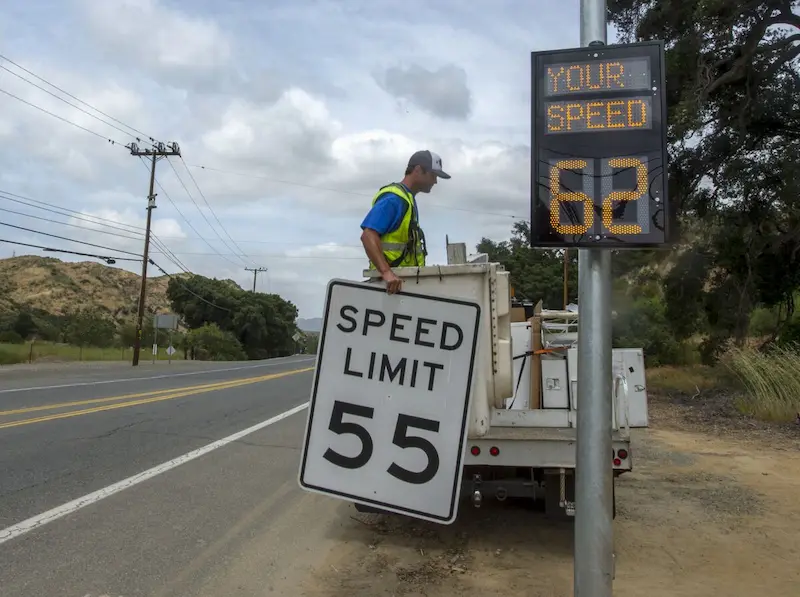


California State Senator Scott Wiener has proposed a groundbreaking bill that could drastically change the way people drive on the state's roads. The bill, known as California Senate Bill 961, aims to tackle the persistent issue of speeding by requiring the use of Intelligent Speed Assist (ISA) technology in all new cars sold statewide by 2027.
Intelligent Speed Assist is a system that utilizes GPS location data to adjust a vehicle's top speed in accordance with the posted speed limit of the road. Under Wiener's bill, all new cars would be equipped with speed limiters set 10 miles per hour above the speed limit. This technology not only aims to reduce speeding-related fatalities but also promote safer driving habits among motorists.
Speeding has long been a major contributor to traffic accidents and fatalities in the United States, causing over 12,000 deaths annually. The problem escalated during the Covid-19 pandemic, with fewer cars on the road tempting drivers to push the limits. Despite various efforts such as police enforcement, public service announcement campaigns, and automated speed cameras, traditional methods have struggled to effectively deter speeding.
Wiener's proposal, if passed, would make California the first state in the US to mandate the use of Intelligent Speed Assist technology. This move could potentially set a precedent for other states to follow in their efforts to tackle the road safety crisis. However, the bill is expected to face significant opposition, with critics arguing that it would limit individual freedom and lead to slower travel times.
While speed limiting technology is not a new concept, gaining traction and implementation has proven challenging. A century ago, legislators in Cincinnati attempted to enforce mandatory speed governors for automobiles but ultimately failed. However, in today's era of faster vehicles and increasing pedestrian fatalities, the need for innovative solutions is becoming ever more crucial.
The European Union has already embraced Intelligent Speed Assist, with a mandate set to take effect later this year. However, Congress and the National Highway Traffic Safety Administration in the US have not shown any indications of following suit. Despite this, if California's bill successfully becomes law, it would mark a significant milestone for the fledgling movement to leverage speed limiter technology for road safety.
Senator Wiener, known for his endeavors in areas such as housing reform and LGBTQ+ rights, is accustomed to controversy. Fox News and other conservative outlets have already begun criticizing the proposed bill, with some decrying its potential impact on the enjoyment of driving. Nevertheless, Wiener remains committed to his goal of reducing traffic fatalities by employing innovative technologies like Intelligent Speed Assist.
Even if the federal government does not take up the cause, states and cities across the country may look to California's example as inspiration to adopt similar measures on their own. With road safety being a paramount concern, it's clear that new solutions are required to curb speeding and make our streets safer for everyone. The passage of California's Senate Bill 961 could pave the way for a revolution in how we approach speed limits and vehicle safety nationwide.