


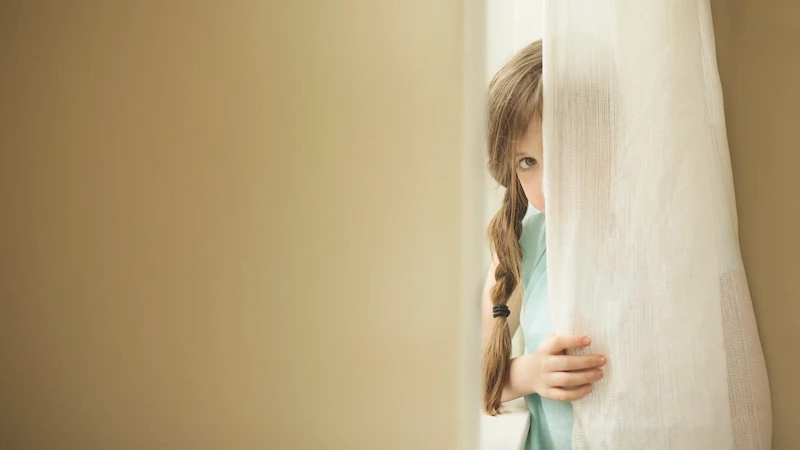


A recent study published in the Society for Research in Child Development journal reveals that shyness could be a feeling or a trait. The study observed 152 children aged 7 and 8 giving a speech, which was filmed and shown to other children. Researchers examined various factors such as physiological danger responses, nervous behaviors, and affect response, while parents reported their children's shyness tendencies before the study. The study found that around 10% of the children who showed a high level of stress while giving the speech also displayed relatively high levels of shyness over time, indicating that shyness might be part of their temperament.
Additionally, the study found that approximately 25% of the children were not reported to be shy by their parents but showed a higher level of social stress reactivity from giving the speech. This finding suggests that shyness in response to a speech task is a common, normative experience for children at this age. However, for some temperamentally shy children, being the center of attention may be stressful across time and various contexts.
The study's limitations include that the children studied were predominantly white and from the same socioeconomic background, which is not entirely representative of the larger population. Therefore, larger and more diverse studies are necessary to track the emergence of groups of children across different communities and see how well these children do over time.
Notably, a shy temperament is not always as socially valued as more outgoing personalities, but that doesn't mean that there is something wrong with it. It is essential to recognize that everyone can feel shy at times, depending on the setting. Moreover, shy individuals can also have happy social lives, even if they are not the bubbliest person in the room.
However, of the most persistently shy children, about half will develop an anxiety disorder, which is a cause for concern. Parents should think about intervening if their children have difficulty functioning at school, making or keeping friends, or engaging in typical activities such as clubs or sports.
While shyness is not a problem in itself, families should be on the lookout for signs of anxiety in their shy children. If a child is avoiding situations that are important or could be enjoyable for them because they are feeling nervous, it might be time to intervene. A child and adolescent psychologist at Johns Hopkins Children's Center suggested that instead of labeling the child as shy, parents should describe what they see and normalize their feelings.
In conclusion, while shyness can be a feeling or a trait, it is crucial to recognize that not all shy children are alike, and many shy children grow up to be well-adjusted adults. Children need support in overcoming their shyness gradually, and it is essential to seek professional help when necessary.