


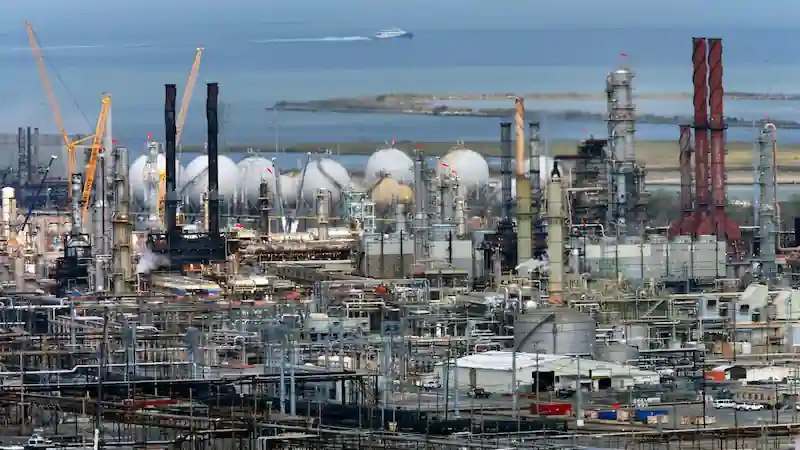


A new study has found that hundreds of hazardous industrial sites along the California coastline, including oil and gas refineries and sewage-treatment plants, are at risk of severe flooding from rising sea levels if the climate crisis worsens. The study, which was published in the journal Environmental Science & Technology, estimates that 129 industrial sites could be at risk of coastal flooding by 2050 if planet-warming pollution continues to rise unabated. By the end of the century, the number of toxic sites at risk could increase to 423.
The research also revealed that residents living within a kilometer of these contaminated sites tend to be more vulnerable, including people of color, the elderly, unemployed, and low-income communities. The disadvantaged population around these sites is expected to grow as well.
The study is the first to comprehensively examine a broad suite of hazardous sites impacted by rapidly rising seas. The report highlights that certain types of facilities, such as oil refineries, are at a particularly high risk of flooding. Floods can cause dangerous amounts of substances and contaminants to flow out of these facilities, polluting the land and air and often seeping into communities’ groundwater.
Many of the hazardous sites are clustered around large metro areas on the coast, such as San Diego and Los Angeles in Southern California, the San Francisco Bay Area, and around Eureka in Northern California.
To improve the scientific findings, the researchers reached out to community members, including the Asian Pacific Environmental Network, who led a series of webinars to share preliminary results and get feedback from a larger set of stakeholders. The study also incorporated future changes in groundwater levels, given recent concerns over the West’s megadrought and over-pumping.
The study underscores the need for action to address the climate crisis and protect vulnerable communities from the impacts of rising seas.