


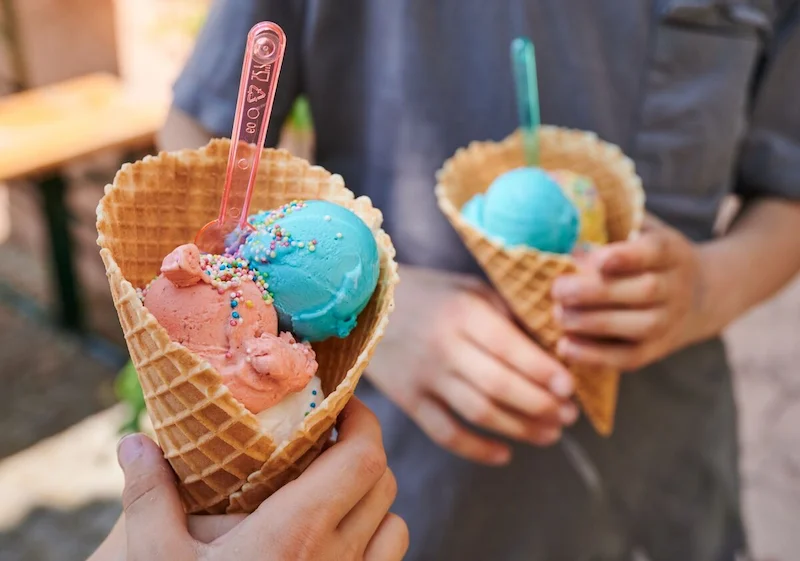


There’s something quietly stirring in the freezer aisle, and it’s not just the whir of refrigerated shelves. Over 40 U.S. ice cream producers—together responsible for churning out more than 90% of the nation’s frozen favorites—are setting down their sprinkles and taking a firm stand: artificial dyes, your time is almost up.
By the end of 2027, those brightly colored scoops of Blue Moon, bubblegum, or neon sherbet will start to look a bit more... well, natural. That’s because the International Dairy Foods Association (IDFA) is announcing a sweeping pledge to phase out seven synthetic food dyes: Red No. 3, Red 40, Green 3, Blue 1, Blue 2, Yellow 5, and Yellow 6. The announcement is expected to come later today at a joint press event hosted by the U.S. Department of Agriculture and Health and Human Services (HHS).
Behind this frozen revolution is HHS Secretary Robert F. Kennedy Jr., who has been quietly but persistently pushing for cleaner labels in American foods since taking office. Artificial dyes have long been a sticking point for many nutrition experts and parent groups, especially given concerns around hyperactivity and other health impacts in children. For Kennedy, this moment marks a win in what has been a long fight.
Michael Dykes, CEO of the dairy association, didn’t mince words when praising the move: “I am proud of ice cream makers and dairy foods companies for stepping up for American families.” He called the effort voluntary, yes, but also necessary—an answer to growing public awareness and concern.
Big names in food—think Kraft Heinz, Nestlé, General Mills—have already started shifting away from synthetic dyes. But the frozen dessert world? It’s been a bit slower to catch on. Ice cream, especially in the U.S., isn’t just about taste. It’s about color, mood, nostalgia. Pulling back on bright hues might seem like a risk to marketers, but companies like Turkey Hill and Schwoeppe Dairy say the shift is not only doable, it’s overdue.
It's also strategic. States like California are beginning to roll out legislation that bans or restricts specific additives. Getting ahead of the curve is not just good PR—it’s also practical business.
Interestingly, this pledge won’t apply across the board. Non-dairy ice creams, independent shops, and restaurants making ice cream in-house won’t be bound by the same commitment. But in the grand scheme of things, this pledge still affects the lion’s share of what's in your grocery store freezer. That’s where the vast majority of Americans get their mint chip fix anyway.
The numbers are no joke. In 2024, the U.S. produced roughly 1.3 billion gallons of ice cream. On average, each American eats about 19 pounds of it annually. That’s four gallons per person—a sizable scoop of the national diet. Cutting synthetic dyes out of that equation, even partially, makes a difference.
Meanwhile, the Food and Drug Administration is playing its part, too. On Monday, it gave the green light for gardenia extract to be used as a natural blue coloring. It’s the fourth natural dye approved in just two months, suggesting that the agency is keeping pace with consumer demand and industry innovation. And back in April, the FDA made its stance on Red No. 3 clear: phase it out—and fast.
For decades, color was king in processed foods. But the tide is turning. Taste still matters, of course, but today’s consumers are scrutinizing ingredient lists like never before. What’s in the carton is starting to matter just as much as how it looks on the cone.
So next time you’re eyeing that swirl of rainbow-colored cream, look again. By 2028, it might still taste like childhood—but it could be colored with cabbage, spirulina, or beet juice instead of petroleum-derived compounds. Change might not come with fanfare, but in this case, it comes cold, sweet, and quietly cleaner.