


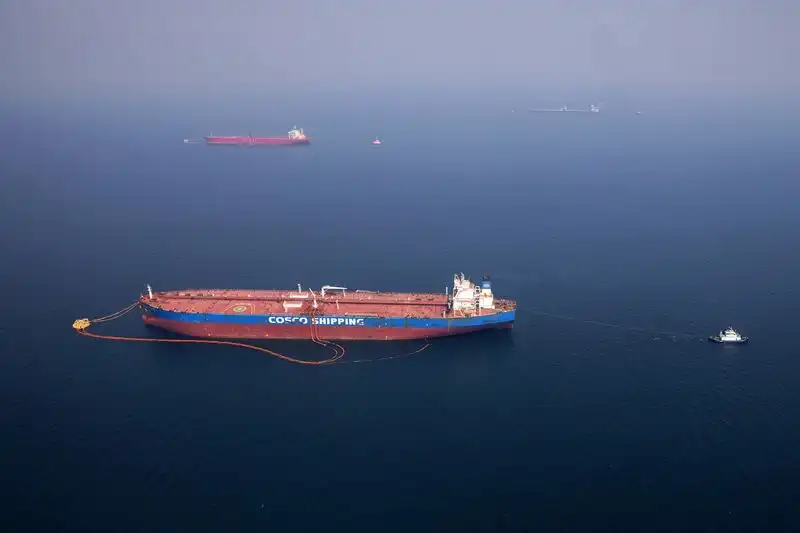


A cluster of supertankers carrying Saudi Arabian crude, holding more than 20 million barrels, has formed off the coast of Egypt's Red Sea, the most since 2020, according to data from Vortexa. It is unclear why this buildup has occurred at a time when Saudi Arabia has promised to cut production to boost prices. Investors remain concerned about the possibility of a supply glut in the markets as they try to predict the direction of demand growth, especially in China.
Vortexa's head of market intelligence and analysis for the Middle East and North Africa, Jay Maroo, noted in a recent article that the last time Saudi crude floating storage levels were above current levels was in Q2 2020, when they peaked at 30 million barrels. However, at that time, there was a wider increase in floating storage levels, and the strong contango structure encouraged this activity.
Maroo believes that one possible explanation for the increase in tankers in the area is the higher demand for Saudi crude in Europe, as there are no reported infrastructure issues. Vessels continue to arrive at Ain Sukhna's Red Sea oil terminal, discharging cargoes with little or no delay. Ain Sukhna is the starting point for the SUMED pipeline, owned by several Middle Eastern oil-producing countries, including Saudi Arabia, which is the pipeline's largest user.
Bloomberg's vessel tracking data monitor indicates that eight of the ten ships anchored near Ain Sukhna are Saudi-owned.