


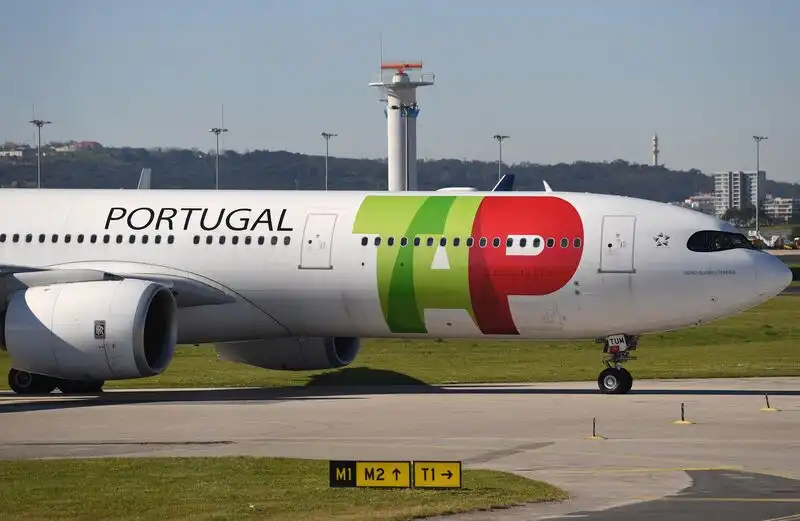


The Portuguese government is moving closer to its plan of selling off a portion of its state-owned airline, TAP SA, with the announcement that the rules for the privatization process will be outlined in the coming weeks. Finance Minister Fernando Medina emphasized that key factors in the sale will include the company's growth, expansion of its activities, maintaining its hub in Lisbon, protecting the TAP brand, and ensuring the smooth operation of the airline.
TAP, which has a 78-year history, not only serves as a major carrier for international tourists visiting Portugal, but also connects Portuguese citizens living abroad and provides crucial transport links to the Madeira and Azores archipelagos. To ensure that strategic objectives are met, the government plans to retain a stake in the airline even after privatization, as Prime Minister Antonio Costa reaffirmed earlier this year.
To aid in the valuation of TAP, Portugal has enlisted the services of Ernst & Young and Banco Finantia SA. The interest in TAP from larger airlines such as Air France-KLM, Lufthansa, and IAG, the parent company of British Airways and Iberia, has been acknowledged.
This is not the first privatization attempt for TAP. In 2015, the Portuguese government agreed to sell a 61% stake in the carrier to Atlantic Gateway, a consortium that included airline entrepreneur David Neeleman. However, the Socialist government, led by Prime Minister Costa, partially reversed the privatization shortly after taking office, increasing the government's stake to 50%. In subsequent years, the government acquired Neeleman's indirect stake, eventually becoming the sole owner of the airline in December 2021.
Like many other airlines, TAP faced significant challenges during the COVID-19 pandemic, leading to a halt in operations and the need for financial support from the government. In 2021, the European Commission approved over €2 billion ($2.2 billion) in restructuring aid for TAP. Despite these setbacks, TAP reported carrying 7.6 million passengers in the first half of this year, representing a 30% increase compared to the same period in 2020.