


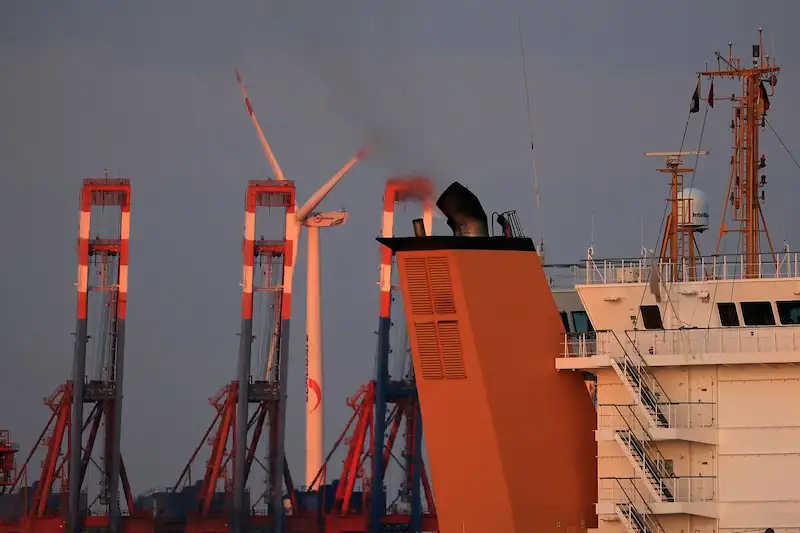


The global shipping industry is facing a complex challenge as it strives to become more environmentally friendly. One of the major issues at hand is the definition of what it means to be "green" in this context. While the industry made a significant change three-and-a-half years ago by adopting regulations that reduced sulfur emissions from marine fuels, new research suggests that this move may have had unintended consequences for ocean temperatures.
The regulations, known as IMO 2020, aimed to curb the harmful effects of sulfur oxide emissions by reducing the allowable sulfur content in marine fuel from 3.5% to 0.5%. This was expected to result in a 77% reduction in sulfur oxide emissions, leading to improved air quality and numerous health benefits. However, scientists now argue that this reduction in sulfur emissions may actually contribute to warmer ocean temperatures.
It is important to note that the shipping industry's sulfur emissions have a cooling effect on the climate. They reflect sunlight and increase the formation of reflective clouds, which help offset the warming effects of greenhouse gas emissions. These factors were known prior to the implementation of IMO 2020.
While the reduction in sulfur emissions was primarily driven by the focus on health benefits, the potential impact on ocean warming was not given significant consideration. Research suggests that IMO 2020 may have added about 0.2°C to the North Atlantic region and contributed to record-high temperatures. Marine heatwaves have also been observed in the Mediterranean Sea this summer.
Estimating the precise impact of shipping emissions on ocean temperatures is complicated by other factors, such as changes in Saharan dust and the aftermath of large-scale wildfires. The reduced sulfur emissions will undoubtedly have long-term effects, but understanding the full impact of these changes will require dedicated research.
Shipping is a major contributor to greenhouse gas emissions, accounting for over a billion tons in 2018 alone. To address this, the International Maritime Organization (IMO) has set new reduction goals, aiming for net-zero greenhouse gas emissions by 2050. The European Union is also implementing measures to include shipping in its emissions trading scheme.
In addition to sulfur regulations, the use of liquified natural gas (LNG) as a fuel source is another step towards greener shipping. While LNG releases less CO2 compared to traditional marine fuels, it emits methane, a potent greenhouse gas.
As the shipping industry continues its journey towards a more sustainable future, debates around the effectiveness of new regulations and initiatives will likely shift from whether they are "green" to whether they are "green enough." The focus will be on striking a balance between reducing emissions and minimizing unintended consequences on the environment.