


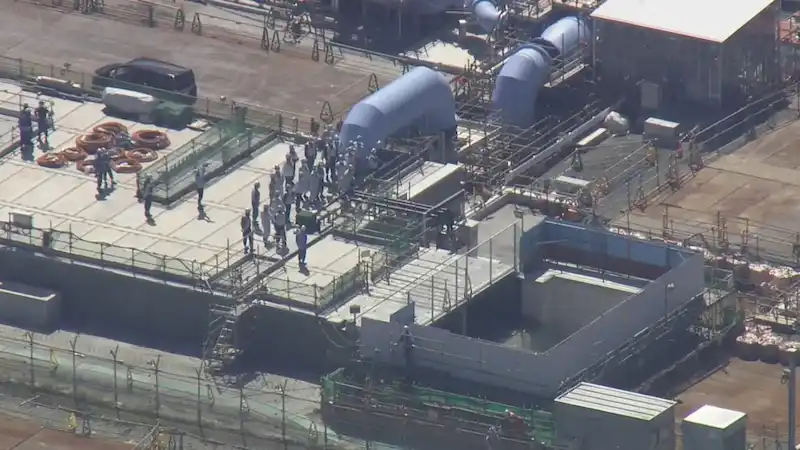


China has taken a significant step in its escalating feud with Japan by announcing a ban on all seafood imports from its neighbor. This move comes as a response to Japan's decision to release treated radioactive wastewater from the Fukushima nuclear plant. The controversial plan has faced intense opposition from consumers and several regional countries, with China leading the criticism.
The release of the treated water started on Thursday, sparking a furious reaction from China, which labeled the operation as selfish and irresponsible. In response, China's customs department declared a halt on importing all aquatic products from Japan, extending beyond just seafood to include items such as sea salt and seaweed. The ban aims to mitigate the risk of radioactive contamination in food, safeguarding Chinese consumers' health, according to the customs department's statement.
Japan, however, maintains that discharging the treated water is safe and a necessary measure to create space at the heavily damaged nuclear power plant. The release began with a volume of around 200 to 210 cubic meters, and from Friday, Japan plans to continuously release 456 cubic meters over a 24-hour period, amounting to a total of 7,800 cubic meters over 17 days. Tokyo Electric Power Company (TEPCO), a state-owned electricity firm, assured that an immediate suspension and investigation would take place if any abnormalities are detected.
Years of pumping in new water to cool fuel debris in the reactors, coupled with the leakage of groundwater and rainwater, have resulted in the accumulation of highly radioactive wastewater within the Fukushima nuclear plant. Authorities have argued for years that releasing the treated and highly diluted water is the only viable option due to the limited storage capacity.
Various governments, including the United States and Taiwan, have expressed support for Japan's decision. Nonetheless, strong opposition has been voiced by China and Pacific Island nations, concerned about the potential regional and international impact, as well as the risks posed to human health and the marine environment.
Before the seafood ban was announced, China's foreign affairs ministry criticized the wastewater release, emphasizing the transfer of risks to the global community and the future generations' suffering. Chinese social media platforms were inundated with anger and dismay, with a hashtag about the release garnering over 800 million views on Weibo in just a few hours. Some users supported the seafood ban, and there were calls to boycott all Japanese products.
The ban imposed by China expands on previous regulations that already halted imports from Fukushima and nine other regions of Japan. Hong Kong has also announced a similar ban on food imported from parts of Japan. As mainland China and Hong Kong are Japan's top two export markets for seafood, this ban poses a potential challenge for the Japanese fishing industry.
Despite the backlash, Japanese authorities and their international supporters, including the United Nations' nuclear watchdog, assert that the release is safe. The wastewater has undergone continuous filtration and is stored in tanks. Prior to its release, it will be heavily diluted with clean water to reduce concentrations of radioactive material. The water will be discharged into the Pacific Ocean through an undersea tunnel located about 1 kilometer off the coast.
Third-party organizations, including the International Atomic Energy Agency (IAEA) of the United Nations, will monitor the discharge both during and after its release. The IAEA has established an office in Fukushima and plans to oversee the situation for an extended period.