


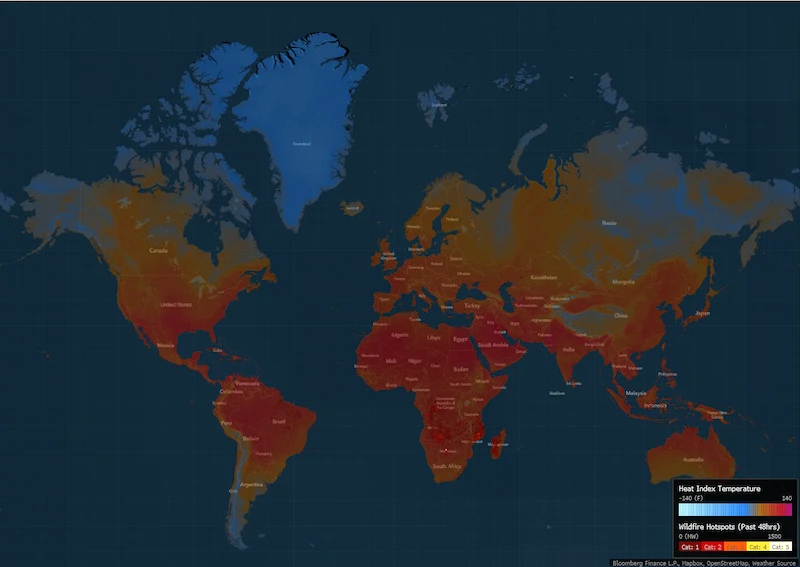


Searing temperatures experienced this summer, from Texas to Tokyo, have highlighted a new challenge for the energy system: extreme heat as a threat to fuel supply. On top of the surge in electricity demand due to increased use of air conditioners, the scorching temperatures have led to disruptions at oil refineries. Consequently, gasoline prices in the US have remained high, and diesel costs have increased more quickly than crude prices. This summer was particularly punishing, with July being recorded as the hottest month on record globally, following the hottest June.
The extreme heat caused oil processing at refineries to drop at least 2% globally over the past two months, according to Macquarie Group. While this percentage may seem relatively low, it has had an impact on a refining system that has already been strained due to years of under-investment, combined with tight oil product markets resulting from the war in Ukraine. Refining operations in Europe were hit particularly hard, with crude processing dropping by an estimated 700,000 barrels per day over the summer compared to the previous year.
European oil refineries were affected by the extreme heat, as more than half of the processing drop was attributed to the weather conditions. Steve Sawyer, director of refining and head of downstream at industry consultant FGE, explained that the rising temperatures are causing constraints in supply while also increasing demand for fuel oil, which is commonly used for electricity generation in South Asia and the Middle East. Additionally, extreme heat has led to vital waterways, such as the Rhine river and the Panama Canal, drying up, leading to increased transportation costs.
Serena Huang, lead Asia analyst at Vortexa Ltd, notes that rising ambient temperatures are reducing the efficiency of refinery units, which, coupled with aging plants, is causing more outages. This disruption in supply and shipping operations is likely to introduce uncertainty and increase price volatility in the market. While extreme heat remains a bigger issue for electricity grids, its impact on fuel markets is amplified due to dwindling stockpiles. For example, middle distillate inventories in the US, including diesel, are currently at a five-year seasonal low.
The challenges posed by extreme heat on refinery operations and fuel prices are not the only concerns. As climate change continues to cause extreme weather events, such as colder winters in the Northern Hemisphere, there is a significant impact on the energy industry. For instance, the polar vortex caused freezing weather in the US in late December, resulting in a drop in refinery throughput. Parsley Ong, head of Asia energy and chemicals research at JPMorgan Chase & Co, estimates that refinery throughput decreased by around 2 million barrels per day during that period.
These weather-driven disruptions to refineries highlight the growing challenges faced by the world as it attempts to transition away from fossil fuels while also addressing the impact of climate change. The market's vulnerability to unforeseen supply disruptions anywhere is evident, as there is a lack of backup plans, limited stockpiles, and insufficient excess capacity globally. Frederic Lasserre, global head of research and analysis at Gunvor Group Ltd, sums up the situation by stating, "Everyone knows there's no plan B. We have no stocks, and we have no excess capacity anywhere."