


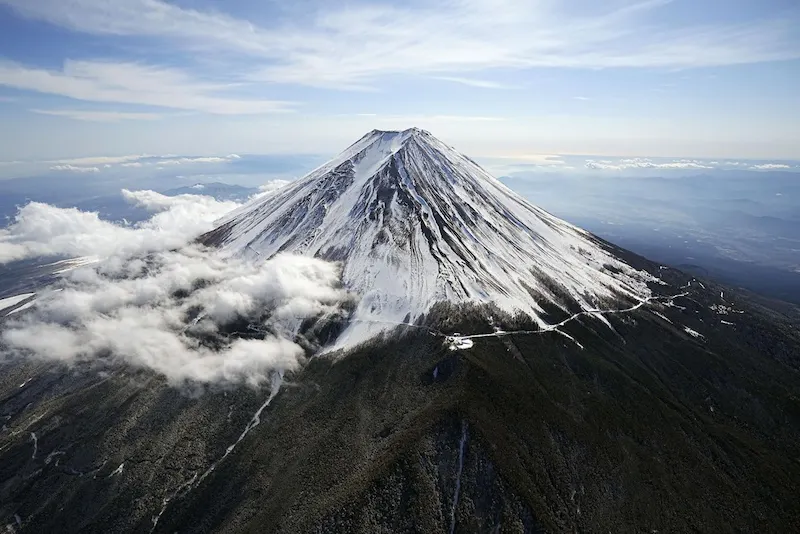


Mount Fuji, Japan's highest peak and a UNESCO World Heritage site, is facing a crisis due to overwhelming tourist numbers and the consequences that come with them. Over the past few years, the number of visitors to Mount Fuji has more than doubled, reaching over five million in 2019. Since the start of the climbing season this year, around 65,000 hikers have already reached the summit, marking a 17% increase compared to 2019. This surge in tourism, driven by a post-Covid tourism boom, has put a significant strain on the mountain's ecosystem and infrastructure.
One of the biggest concerns is the issue of overtourism. The influx of visitors has resulted in overcrowding on the mountain, causing traffic jams, littering, and reckless behavior from some hikers. Miho Sakurai, a veteran ranger who has patrolled Mount Fuji for several years, expresses her concern about the increasing number of people on the mountain and the environmental impact it has. She laments the fact that some hikers attempt the ascent in inappropriate attire, such as sandals, further endangering themselves and adding to the strain on limited resources.
The fifth hiking station, known as "Gogome," is particularly affected by the overcrowding. Located halfway up the mountain, it receives 90% of the mountain's visitors, who arrive by buses, taxis, and electric vehicles along the Fuji Subaru Line mountain road. This road, built decades ago to provide easy access to the mountain, has contributed to the surge in tourism. While private cars are no longer permitted unless they are fully electric, the number of buses transporting large groups of visitors has increased, further exacerbating the crowding issue.
The consequences of overtourism are evident throughout Mount Fuji. The limited toilet facilities and medical stations struggle to cope with the increasing number of hikers. Additionally, seasoned climbers are experiencing a decline in the mountaineering experience. Congestion and traffic jams on the trails have resulted in longer climbing times and frustration among climbers. Yamamoto, a national parks and Mount Fuji specialist, explains how the amassing of hikers near the summit, particularly those eager to witness the sunrise, has led to delays and a compromised experience for many.
Efforts have been made to address the challenges posed by overtourism on Mount Fuji. Volunteer organizations have conducted extensive clean-up activities to alleviate the garbage problem, collecting thousands of tons of rubbish over the years. In an innovative approach, garbage patrols using electric bikes equipped with cameras and AI technology have been introduced to monitor and map the types and quantities of rubbish in different areas. Additionally, the number of climbers allowed per day on the popular Yoshida trail has been capped at 4,000, though enforcing this limit remains a challenge.
To address the issue, proposals have been put forward to manage visitor numbers more effectively. Suggestions include implementing a system where only hikers with confirmed parking reservations or lodge bookings are allowed to access the mountain. Another proposal is to build a light rail transit system on top of the Fuji Subaru Line road, restricting car and bus traffic to the fifth station. These measures aim to control crowds, improve the visitor experience, and reduce the strain on the mountain's infrastructure.
Mount Fuji is at a critical point in its environmental sustainability as it marks the 10th anniversary of its UNESCO designation. It is clear that immediate action is necessary to tackle overtourism and preserve the sacredness and value of this iconic landmark. With proper management and a shift towards quality tourism, Mount Fuji can regain its allure as a world-renowned destination while protecting its natural beauty for generations to come.