


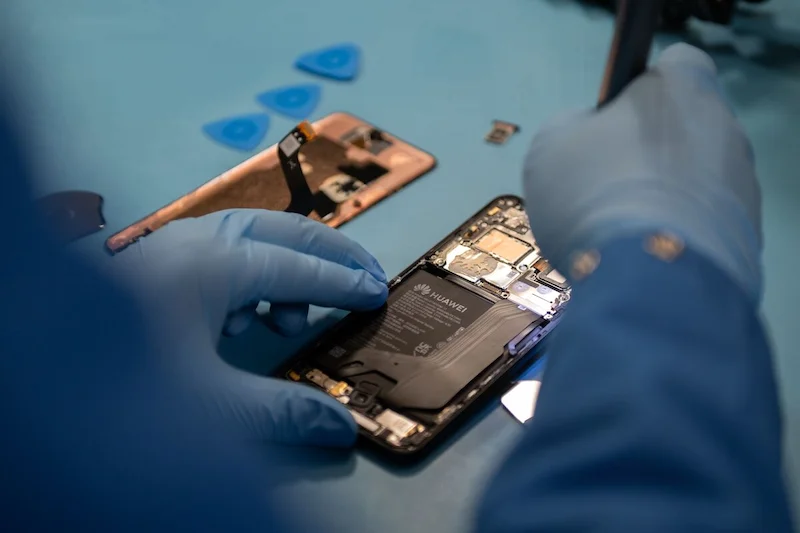


Semiconductor Manufacturing International Corp. (SMIC) has emerged as a secret weapon for Beijing in its quest to break through a US-organized blockade aimed at containing China's technological progress. Despite facing years of American sanctions, SMIC's success in delivering an advanced, 7-nanometer processor to Huawei has triggered celebration in China and raised concerns in Washington. The little-known chipmaker has defied US restrictions and managed to produce cutting-edge chips, propelling its stock value and drawing attention from industry experts and lawmakers.
SMIC's achievements are particularly surprising considering the company has been subjected to US restrictions for over a decade and was officially blacklisted in 2020. Although the US Commerce Department is supposed to impose broad control over SMIC's purchases of equipment or software with American inputs, it has continued to issue licenses to SMIC suppliers in certain cases. This has prompted calls from US lawmakers and industry experts for the Biden administration to take stronger measures against SMIC, even if it risks escalating US-China tensions.
While the US government claims its chip strategy is focused on China's military capabilities rather than smartphones, semiconductors play a crucial role in various industries. SMIC's ability to deliver high-quality chips has created optimism among local investors, leading to a 22% increase in the company's stock value since the unveiling of Huawei's Mate 60 Pro in August.
The question now is whether SMIC can sustain its chip production in larger volumes, or if the US will further restrict its capabilities. Commerce Secretary Gina Raimondo has suggested that China lacks the capacity to produce such components on a large scale, but industry veterans argue that the US is underestimating SMIC's capabilities. SMIC has been accumulating chipmaking machines for years, including the same models used to create the industry's first 7-nm semiconductors. There is confidence that SMIC can advance to more powerful 5-nm chips using the equipment it already possesses.
SMIC's journey has not been without obstacles. The company faced resistance from the US soon after its founding, with Washington halting its plans to acquire chipmaking equipment in 2005. It has also been embroiled in legal battles, accused of improperly using trade secrets from Taiwan Semiconductor Manufacturing Co. Despite these setbacks, SMIC secured support from various stakeholders, including powerful Chinese semiconductor investment vehicles and Singapore's sovereign wealth fund.
In December 2020, the Trump administration blacklisted SMIC over allegations of supporting China's military, a claim strongly denied by the company. These actions restricted US companies from supplying SMIC without a license from the Commerce Department. However, loopholes in the regulations allowed for the continued supply of advanced chipmaking machines from countries like the Netherlands and Japan. SMIC's cooperation with Huawei has drawn the attention of the Justice Department, which is investigating whether equipment was sold without proper licenses.
The future consequences for SMIC remain uncertain. The Biden administration is still determining how to respond to SMIC's collaboration with Huawei. The US recently tightened restrictions on doing business in China, and lawmakers have criticized the administration for inadequate enforcement. While SMIC may face punishment from Washington, its achievements have brought hope to Beijing's goal of building a more self-reliant tech industry. China's semiconductor progression, exemplified by SMIC's accomplishments, showcases its determination to circumvent US sanctions and pursue tech self-sufficiency.