


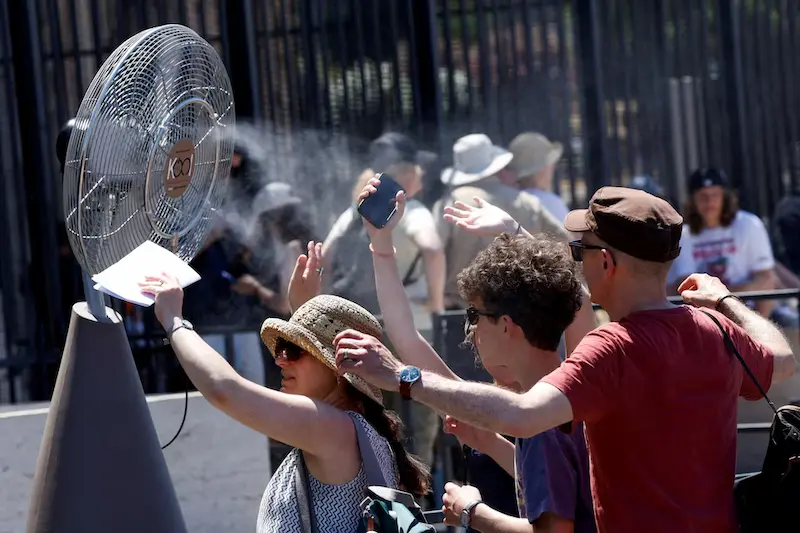


Summer seems to have skipped the line this year, barging into Europe with full force before July even began. On Monday, as much of the continent baked under unrelenting sun, wildfires flared in Turkey and France, prompting mass evacuations and serious health alerts across multiple countries. More than 50,000 people had to leave their homes or holiday spots, with nature offering no signs of cooling down anytime soon.
In Turkey, the western province of Izmir turned into a furnace. The fires, fueled by dry brush and whipped by fierce winds, had been burning since Sunday. By the next day, officials confirmed five separate areas needed evacuation, with over 42,000 people relocated just in Izmir. The Forestry Minister, Ibrahim Yumakli, didn’t mince words—conditions were dangerous and worsening. These summer fires, once rare, are now expected almost annually. Experts aren't surprised. The heat is hotter, the land drier, and the warning signs are all too familiar: climate change is pressing down hard.
Meanwhile, in France, the Aude region saw 400 hectares of land devoured by flames after thermometers climbed past 40°C (104°F). A campsite and an ancient abbey were both emptied as flames advanced. Though the fires are reportedly under control, the battle isn’t over. On Monday, France's weather agency, Météo-France, placed a record-breaking 84 out of 101 departments under an orange alert for heat. It’s a warning for people to stay alert and stay indoors. But for many, that wasn’t an option.
Wimbledon fans stood sweating in long queues, sunburned but determined to catch a match. Tourists clambered over ruins in Rome and leaned against the ancient walls of the Colosseum, desperate for a patch of shade. Scott Henderson, a visitor from Scotland, chuckled while wiping sweat off his face: “It’s about 20 degrees warmer than I’m used to, and I’m roasted.”
In Spain, the heat shows no signs of letting up. Weather officials warned the country is on track to notch its hottest June ever. Some areas have already touched 43.7°C, with Seville feeling more like a furnace than a city. “We’re constantly looking for shade. It’s exhausting,” said Bernabe Rufo, a local worker, as he cleaned out a fountain, water trickling under his feet.
Italy wasn’t spared either. Sixteen cities, including Rome and Milan, are now under red alerts issued by the Health Ministry. Milan’s Lombardy region is going as far as planning to ban outdoor work during peak hours to protect laborers from sunstroke. In Germany, too, southwestern areas broiled under 34°C temperatures, and authorities urged residents to limit their water usage.
The Rhine River, a major European trade route, has been hit hard as well. Low water levels caused by the heat have disrupted shipping and jacked up freight prices, while energy demand has surged across Germany and France due to the increased use of air conditioning and fans. Power prices for baseload energy delivery on Tuesday spiked in response.
But amid the headlines, the underlying danger is far graver. Scientists warn that extreme heatwaves aren’t just uncomfortable or inconvenient—they’re deadly. Heat is already the silent killer of up to half a million people each year worldwide, more than earthquakes, floods, and hurricanes combined. The elderly, infants, outdoor workers, and people with limited means are at highest risk. Hospitals across Europe are already feeling the pressure.
Climate experts have been clear for years: burning fossil fuels is pushing Earth’s thermostat beyond safe limits. Greenhouse gases are accumulating, and last year was the hottest in recorded history. This summer may still be in its early days, but if June is any indication, what lies ahead for July and August could push people, and infrastructure, to the brink. Europe is no stranger to heat—but it’s now facing a version of summer it never asked for.