




The long-standing tensions between Serbia and Kosovo have resulted in the worst violence in years, with rising ethnic hostilities marking decades of the bloody breakup of Yugoslavia. Kosovo declared its independence from Serbia over a decade ago, but the latter continues to refuse to acknowledge the move. Meanwhile, Russia's invasion of Ukraine has added another dimension to the standoff. The ongoing tensions between authorities in Kosovo and the Serb minority have also raised concerns, leading to the worst violence in years.
One of the main driving forces behind the escalating tensions between Serbia and Kosovo is Kosovo's predominantly ethnic Albanian population of 1.8 million, which includes over 100,000 Serbs. In August 2022, authorities tried to force the Serbian minority to exchange their Serbian-issued car plates and personal documents for those issued by Kosovo. This administrative order was viewed as a threat by many ethnic Serbs, who saw it as an affront to their identity. Following this, large numbers of Serb police officers in northern Kosovo resigned in protest. After three such officers were arrested on suspicion of terrorism last year, members of the community responded by protesting and blocking roads.
The decade-long history of unrest between Serbia and Kosovo can be traced back to 1981 when Kosovo's request to be elevated from a province within Serbia to a federal republic within Yugoslavia triggered Serbian nationalism, propelling Slobodan Milosevic to power in Serbia. This crackdown created a demand for full independence by Kosovo's majority. It resulted in more than a decade of war, which ended in 1999 when NATO's bombing forced Serb troops out of Kosovo. An estimated 200,000 Serb civilians fled the area. Serbia remains committed to preventing Kosovo's secession and considers the region its historic heartland, a stance supported by Russia, China, and five EU members.
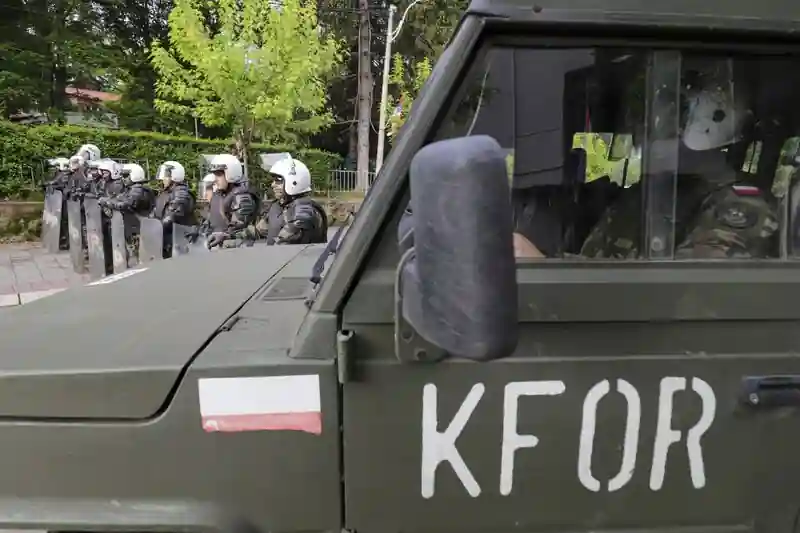
Since the full-scale invasion of Ukraine by Russia under President Vladimir Putin, an outspoken Serbia supporter, the geopolitical divisions over Kosovo have become more acute. Putin has criticized the West for double standards, comparing the cause of Kosovo to that of two regions in eastern Ukraine controlled by Russia-backed separatists since 2014. The leaders of Serbia and Kosovo have used the war in Ukraine to intensify their rhetoric, with the risk of escalation spilling over to other volatile parts of the Western Balkans, including Bosnia-Herzegovina. The NATO-led peace force of almost 3,800 troops is prepared to intervene if stability is threatened.
The two key players in the conflict are Kosovo's Prime Minister Albin Kurti and Serbia's President Aleksandar Vucic. Kurti has accused Serbia of serving Russian interests, while Vucic has said that Kosovo officials are trying to exploit alarm over Ukraine for their own purposes. Both leaders have opponents at home who question their handling of the recurring tensions, but their populations remain largely entrenched in rival nationalism. The US holds more influence than the EU over Kosovo's leadership, while Serbia seeks support from Moscow as well as from Washington and Brussels in handling the dispute. Vucic has condemned the invasion of Ukraine at the United Nations while stopping short of adopting EU sanctions against Russia. In 2022, he secured another five years as president, with his party holding a majority in parliament. Kurti's refusal to make any concessions to Serbia has further complicated any talks with the neighboring nation.
Despite being the key investor in both countries, the EU's relationship with Serbia and Kosovo has been fraught. While the two nations signed an EU-brokered agreement in 2013 on trade, energy, and communications with the vision of giving Kosovo Serbs some self-rule, the latter later said it would not grant autonomy to the Serbian minority and demanded Serbia's full recognition before any further consideration. Serbia is further ahead than Kosovo in the process of negotiating its own accession to the EU, with the bloc making resolving the standoff between Serbia and Kosovo a condition for membership. However, disillusionment with the EU is growing in Serbia, with the belief that it is increasingly distant and preoccupied with its own problems.