


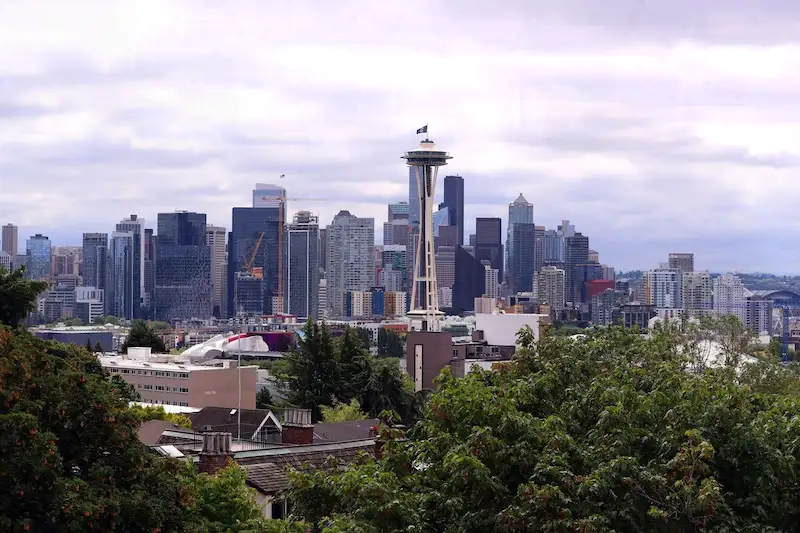


New evidence suggests that the Pacific Northwest of the US could be at risk of a devastating earthquake similar to the infamous San Francisco quake of 1906 or the recent catastrophe in Turkey and Syria. Scientists from the University of Arizona have been studying the rings of ancient and submerged trees to determine the sequence of past earthquakes in the region. Their findings reveal that a series of quakes struck the western Washington area around 1,000 years ago, with some occurring simultaneously and others happening in quick succession, similar to the back-to-back temblors seen in the Middle East. This research could have significant implications for the 4 million people currently residing in cities such as Seattle, Tacoma, and Olympia.
In the past, scientists had been uncertain about the timing between each fault rupture, with possibilities ranging from decades to centuries apart. However, by comparing tree rings in living trees with those found within submerged stumps, the researchers were able to establish a clearer picture. They determined that these quakes were likely connected and took place either in late 923 or early 924. This implies that a repeat event could potentially occur, putting the region at risk once again.
Bryan Black, the lead author of the study and an associate professor at the University of Arizona's Laboratory for Tree-Ring Research, highlighted the significance of their findings. The discovery that these faults can rupture simultaneously or in rapid succession challenges previous earthquake models and understanding of the hazard in the region. It is crucial to acknowledge the possibility of shallow fault activities being linked through underground connections or stress transfer, as this has significant implications for engineering designs and policies.
For instance, if a second earthquake were to occur shortly after the initial one, it could cause even greater destruction. This could lead to the collapse of water mains and roads, triggering landslides and tsunamis. The current earthquake models do not account for these potential scenarios, but the research suggests that they should.
The research serves as a wake-up call for the Pacific Northwest, urging policymakers, engineers, and residents to reconsider their approach to earthquake preparedness. Understanding the potential for linked fault ruptures and the possibility of rapid succession is vital for developing strategies that can mitigate the devastating effects of such events. By incorporating these new findings into earthquake models, the region can take steps towards building more resilient infrastructure and implementing effective disaster response plans.