


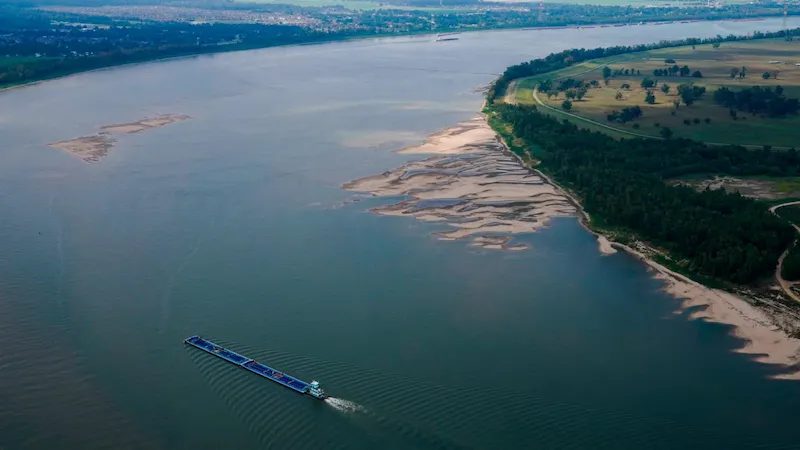


Water levels on the Mississippi River are reaching historically low levels for the second year in a row, leading to a drinking water crisis in Louisiana. The weak flow of the river has allowed ocean water to flow upstream, posing a threat to the region's water supply. With no substantial rain in sight and levels expected to drop even further in the coming weeks, Louisiana's governor has warned that the water woes could extend into January.
According to data from NOAA and the US Geological Survey, water gauges along the Mississippi River, stretching from the mouth of the Ohio River to Jackson, Mississippi, are at or below critical levels. This is causing widespread disruption to residents and industries along the river. In the Memphis area, all the gauges are within the top five lowest levels on record. Additionally, gauges from southern Missouri to central Mississippi are predicted to fall even below record levels by mid-October.
Katie Dedeaux, a hydrologist for the National Weather Service in Memphis, states that lower Mississippi River water levels are expected to continue dropping until at least mid-to-late October. Significant rainfall across the basin is necessary to alleviate the situation, but it is not something that can be resolved overnight.
The dire water levels have put the water supply of tens of thousands of people in four Louisiana parishes, including New Orleans, at risk. Salty ocean water is pushing northward into the water systems, and in order to reverse this, approximately 10 inches of precipitation across the Mississippi Valley is required. However, relief in the form of sufficient rainfall may not arrive until winter.
This ongoing drought on the Mississippi River can be attributed to a combination of factors. The consecutive nature of the droughts has prevented the river from replenishing itself. Furthermore, large areas of the Mississippi River watershed experienced a lack of rainfall over the summer due to persistent heat domes that steered wet weather away from the southern and central US. Louisiana, in particular, witnessed its hottest and third-driest summer on record, with over 85% of the state currently suffering from severe or exceptional drought.
The rainfall deficit in the southern end of the watershed can also be attributed, in part, to the absence of significant hurricane activity in the region over the past two years. Tropical systems often contribute substantial amounts of rain, but none have made landfall in Louisiana or Mississippi recently.
Although October and November are typically low water months for the Mississippi River, this year's rainfall deficits across the watershed, coupled with the ongoing drought conditions, have led to unusually low water levels. However, there is some hope for relief in the long term. The drought outlook released by NOAA's Climate Prediction Center predicts an improvement, though not complete elimination, of drought conditions by the end of the year in the Mississippi Valley. Additionally, there is an increased chance of above-average precipitation over the next three months across the South, partly driven by the ongoing El Niño weather phenomenon.
However, the potential relief brought by an El Niño winter could be a double-edged sword. While it may alleviate drought conditions in the South, drier than average conditions are expected in portions of the northern Plains and Midwest. This could possibly impact rivers that flow into the Mississippi, such as the Missouri and the Ohio, limiting the amount of water feeding into the Mississippi River as a whole.
Currently, 60% of the water that flows into the lower Mississippi River comes from the Ohio River, while the remaining 40% comes from the upper Mississippi River.