




New Studies Urgently Needed to Assess Impact of Offshore Wind Farms on Whale Habitats, Scientists Say. A groundbreaking analysis conducted by the National Academies of Sciences, Engineering, and Medicine has shed light on the pressing need for more comprehensive studies to understand the intricate relationship between offshore wind farms and critical marine ecosystems. The report, published on Friday, highlights the lack of knowledge surrounding the effects of wind turbines installed on the seabed and their potential impact on nearby habitats. This knowledge gap is particularly pronounced in the United States, where the nascent offshore wind industry is rapidly expanding along the coastlines, grappling with logistical challenges and soaring costs.
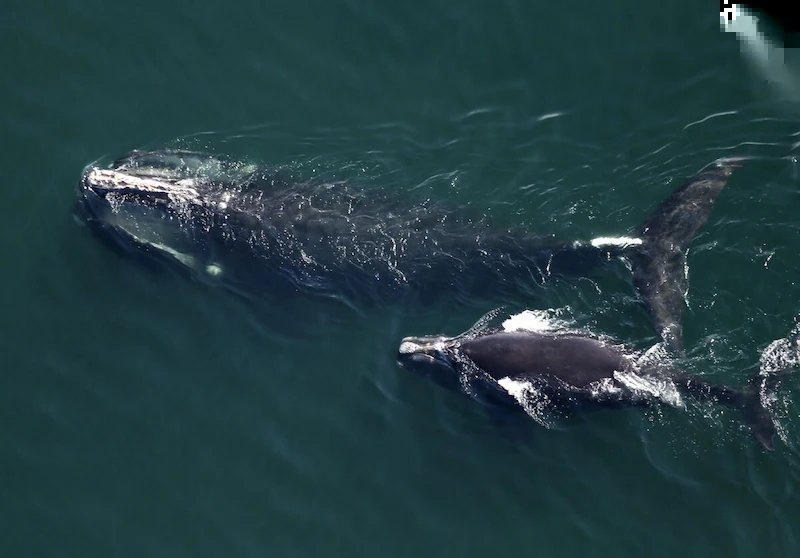
The study, funded by the US Bureau of Ocean Energy Management, zeros in on the Nantucket Shoals off the coast of Massachusetts. This region, known for its consistent and strong winds, shallow waters, and low waves, represents an ideal location for wind farm development. It also serves as a crucial habitat for zooplankton, which constitutes the primary food source for the critically endangered North American right whales.
Opponents of offshore wind farms have seized upon concerns about the potential impact on whale populations, advocating for a temporary halt in development. The recommendations put forth by the National Academies of Sciences could significantly affect nine proposed offshore wind farm projects in the area, including those operated by Copenhagen Infrastructure Partners, Avangrid Renewables LLC, Orsted A/S, and Eversource Energy, among others.
The panel of experts from the National Academies strongly urges the US government to prioritize and, when feasible, mandate observational studies within wind farms throughout their developmental stages. These studies aim to deepen our understanding of right whale distribution, their zooplankton prey, and water movements in the vicinity of wind farms.
Committee chair Eileen Hofmann, a professor in the Department of Ocean and Earth Sciences at Old Dominion University, emphasizes the need for further research and monitoring as these projects move forward. The current body of knowledge on the effects of wind farms on local ecosystems is insufficient to determine with certainty their impact on specific elements of the Nantucket Shoals ecology.
Surprisingly, even a single turbine installed on the seafloor can induce changes in the water's behavior and the ecosystem it supports. As wind passes through a turbine, energy is extracted, leaving a wake behind the structure and disrupting the circulation in the upper ocean, as noted in the report by the National Academies. Additionally, the presence of wind turbines creates increased turbulence in the water surrounding them.
Previous research has highlighted a correlation between changes in zooplankton populations and reduced right whale calving rates. Yet, the report states that it remains unclear whether turbines would lead to an increase or decrease in zooplankton concentrations or have no impact at all.
Nonetheless, the report assures that the changes in zooplankton populations are unlikely to have a significant enough effect to cause annual reductions in foraging success that would decrease right whale calving rates. Nevertheless, understanding the dynamics of foraging in this initial large-scale wind energy site is vital for future wind energy development to prevent any potential population-level impacts.
In conclusion, this study underscores the urgent need for in-depth research to assess the impact of offshore wind farms on crucial marine ecosystems and their resident species, such as the endangered North American right whales. By conducting thorough observational studies and closely monitoring these projects, stakeholders can gather critical information necessary for the sustainable development of wind energy while safeguarding vulnerable habitats and wildlife populations.