


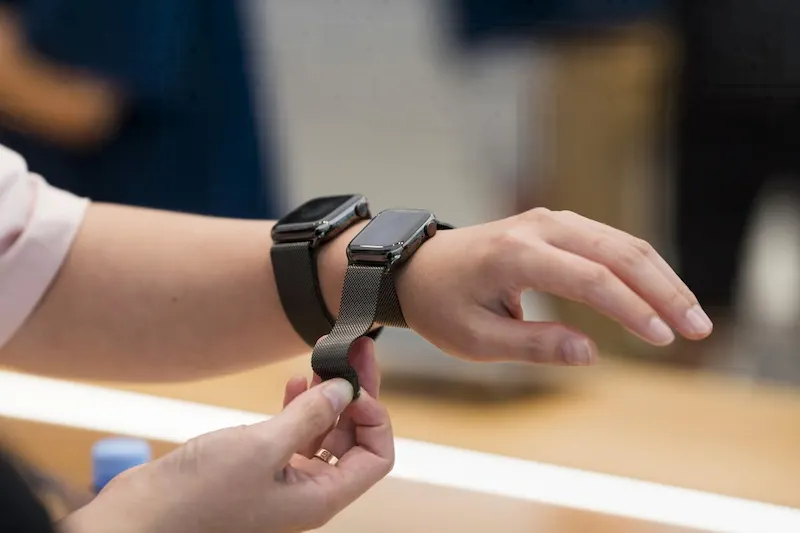


In a surprising move, Apple Inc. has made the decision to sell versions of its latest Apple Watch models without the blood oxygen sensing tool. This drastic measure comes in response to an ongoing patent dispute with Masimo Corp., a smaller US company specializing in medical watches. The US International Trade Commission ruled in October that Apple had violated two of Masimo's patents and ordered a halt to the sales of the infringing devices, namely the Apple Watch Series 9 and Ultra 2.
Initially, Apple was granted a reprieve in December, enabling the affected models to briefly return to the market. However, in mid-January, a federal appeals court denied Apple's request to extend the reprieve. Faced with the possibility of losing billions of dollars annually, Apple decided to take an alternative course of action by removing the disputed blood oxygen sensing feature.
The dispute between Apple and Masimo arose when Apple introduced a new sensor in its Series 6 watches in 2020 to measure blood oxygen levels, which is typically desired to be between 95% and 100%. Masimo, alleging that Apple's method for determining blood oxygen saturation violated its patents, filed a lawsuit. Although the lawsuit resulted in a hung jury, the trade commission ruled on October 26th that Apple was indeed in violation, imposing both an import ban and sales injunction.
The affected models primarily include the mid-tier Series 9 and high-end Ultra 2, which featured the blood oxygen sensing feature upon their release in September. Apple's Apple Watch SE, lacking the disputed feature, remains unaffected by the ruling. While older Apple Watch models such as the Series 6, 7, and 8 did include the feature, they are no longer sold directly by Apple, except for limited quantities of refurbished Series 8 units.
The initial ban went into effect after Christmas Day, with Apple gradually winding down sales on December 21st and ceasing sales at physical stores on December 24th. However, Apple was granted an emergency stay pending a final ruling on their appeal, allowing sales of the affected models to resume on December 27th.
For existing owners of the Series 9 or Ultra 2, the ruling has no impact on their Apple Watches. The blood oxygen app on these models will continue to work as it did before. However, for customers purchasing a Series 9 or Ultra 2 from Apple moving forward, the blood oxygen feature will be present but non-functional. Users will instead be directed to the iPhone Health app for additional information.
Apple's potential next steps include reaching a settlement and licensing agreement with Masimo, which would be the simplest solution. However, Masimo's CEO has stated that Apple has shown no interest in pursuing such an option. Apple is currently appealing its losses to the federal circuit and is also working on a software update to redesign the blood oxygen app in a way that does not infringe on Masimo's patents. The timeline for these processes remains uncertain.
The history between Apple and Masimo dates back to Apple's early development of the Apple Watch, where health tracking was a central focus. In its search for medical sensors for blood oxygen saturation, Apple turned to Masimo. While discussions about Apple acquiring Masimo took place in 2013, Apple ultimately hired several engineers from the company, including its chief medical officer, rather than pursuing an acquisition.
As the patent dispute continues, it remains to be seen how Apple will navigate the challenges posed by the ban on its blood oxygen sensing feature. Both companies may need to explore further legal avenues or potentially find a resolution that benefits both parties.