


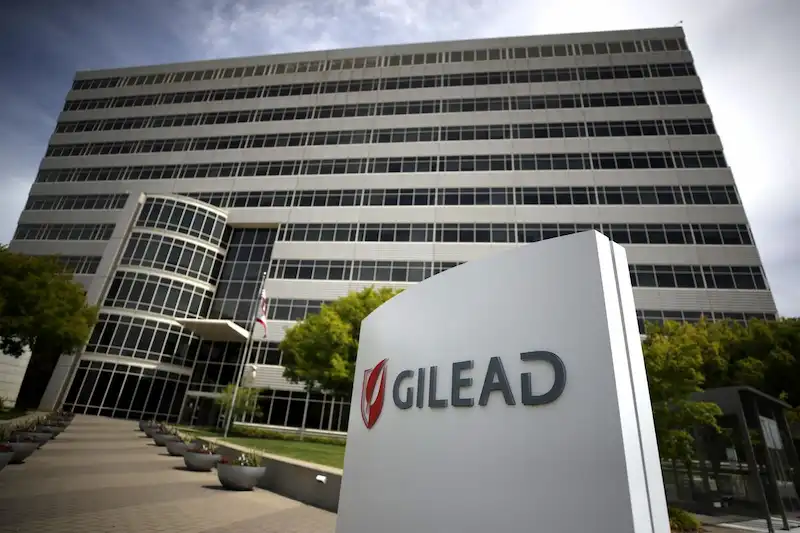


Gilead Sciences Inc. faced a significant setback as its cancer drug Trodelvy failed to achieve a crucial objective in a study involving patients with advanced lung cancer. The Foster City, California-based company revealed on Monday that patients receiving Trodelvy did not experience a significant improvement in survival rates compared to those who were administered chemotherapy alone. This news led to a sharp decline in Gilead's shares, which fell as much as 11% during New York trading, marking the largest intraday drop in over five years.
Trodelvy is classified as an antibody-drug conjugate (ADC), a rapidly emerging class of cancer drugs that transport potent medications directly to tumors. Numerous pharmaceutical companies see ADCs as a source of innovation and profit as they allow for targeted treatments with fewer side effects. However, the recent announcement from Gilead indicates that the development of these drugs may not be as straightforward as initially anticipated. A similar ADC, being developed by AstraZeneca Plc and Daiichi Sankyo Co., also underperformed last year in studies involving lung and breast cancer patients. Despite this setback, Gilead remains committed to exploring the potential benefits of Trodelvy for lung cancer treatment. The company plans to discuss the study results with regulators and aims to identify specific lung cancer patients who may still derive benefits from the drug.
While ADC technology continues to advance, drug companies are still grappling with the challenge of identifying the patients most likely to respond positively to these treatments. Bloomberg Intelligence analyst John Murphy asserts that Gilead and AstraZeneca must improve their ability to accurately select patients who will benefit the most. The disappointing trial results could increase pressure on Gilead's ongoing studies evaluating the combined use of Trodelvy with Merck & Co.'s cancer therapy Keytruda.
The recent setback for Gilead adds to existing doubts surrounding the potential of their pipeline of drugs. Jefferies analyst Michael Yee commented that investor confidence in the sales potential of Gilead's cancer drugs, particularly in the case of lung cancer, may be affected if the overall clinical picture remains unclear. Yee emphasized that AstraZeneca is currently seeking approval for its own lung cancer drug based on an improvement in progression-free survival.
Trodelvy, developed by Gilead, has already received approval for the treatment of certain types of breast and bladder cancer. The company's trial involving Trodelvy included 603 patients with advanced non-small cell lung cancer who had not responded to other treatments, such as chemotherapy or checkpoint inhibitors. Gilead reported a nominal improvement in overall survival rates among patients with common subtypes of non-small cell lung cancer who received Trodelvy. The drug's safety profile remained consistent with previous studies.
However, the study did demonstrate a noticeable difference of over three months in overall survival in favor of Trodelvy for a subset of patients who had not responded to previous immunotherapy treatments. Gilead intends to continue researching this observation and plans to present detailed data from the study at an upcoming medical conference.
In recent times, major pharmaceutical companies have engaged in aggressive acquisition pursuits to obtain ADC manufacturers. Johnson & Johnson acquired Ambrx Biopharma Inc. for $2 billion, AbbVie Inc. signed a $10.1 billion deal for ImmunoGen Inc., and Pfizer Inc. paid $43 billion for Seagen Inc., all within the past year. These acquisitions highlight the growing interest and investment in the potential of ADCs in the fight against cancer.