


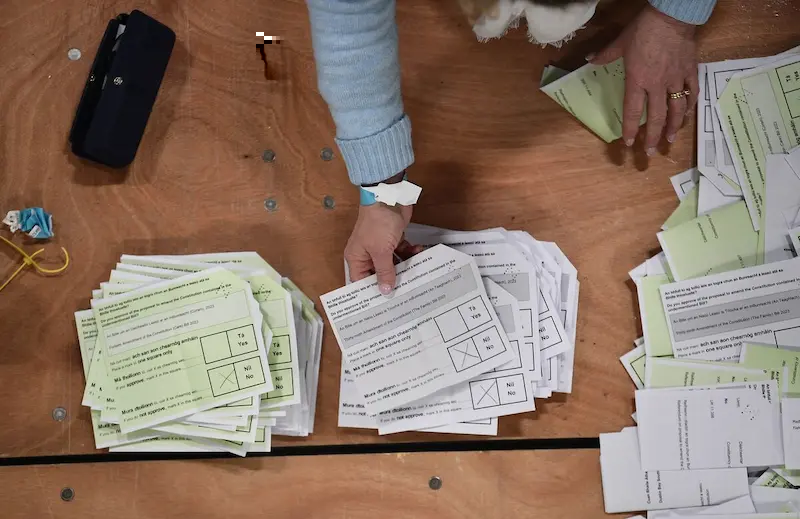


In a surprising turn of events, Irish referendums aimed at updating outdated language in the constitution concerning women and the family suffered a setback on Saturday. The government's efforts to convince citizens of the necessity for change fell short, with Prime Minister Leo Varadkar acknowledging the failure to sway the majority of voters in favor of the proposed amendments. The twin referendums, focusing on broadening the definition of "family" and removing gendered language regarding caregivers in the home, failed to secure the support needed for passage.
Despite initial polling indicating public approval for the proposed changes, a staggering 68% of voters opted against expanding the definition of family beyond traditional marriage. The outcome of the second vote, addressing the role of caregivers, is expected to meet a similar fate due to concerns over vague implications and low turnout. The ambiguous wording of the referendums, coupled with criticisms from civil society groups on the limited scope of the caregiving amendment, played a significant role in the outcome.
Deputy Prime Minister Micheál Martin noted that the majority of voters were not swayed by the arguments put forth for constitutional changes in this manner. The government's decision to hold the referendums on International Women's Day to highlight their significance as a step towards progress in Ireland ultimately did not resonate with the electorate as anticipated. Despite the country's recent social transformations, including the legalization of abortion in 2018 and shifts in societal norms, the referendum results underscore the complexities of initiating constitutional amendments in Ireland's evolving landscape.
Civil society organizations voiced concerns over the lack of recognition for care as a public good beyond the confines of the home, while legal experts questioned the effectiveness of constitutional changes in upholding rights for all caregivers. Opposition party Sinn Fein criticized the government for its handling of the referendum process, citing a failure to listen to feedback and address the confusion surrounding the proposed amendments. The contentious nature of the debate, touching on gender roles, domestic responsibilities, and societal expectations, reflects the ongoing dialogue on gender equality and family dynamics in Ireland.