


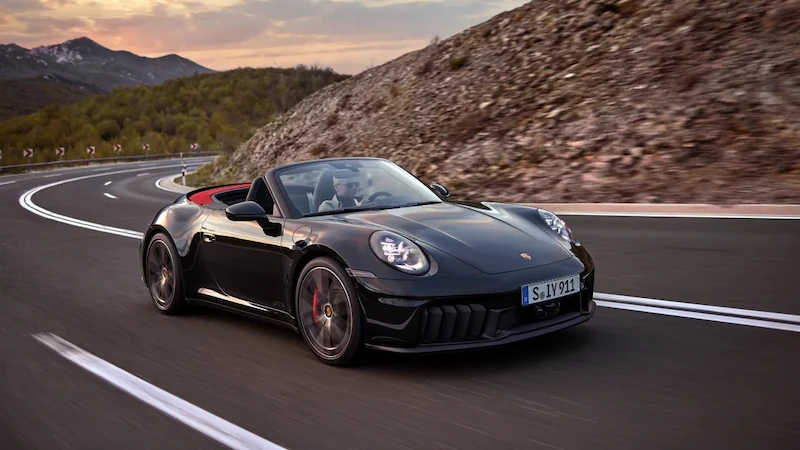


The globally renowned German automaker, Porsche, has recently revealed the hybrid variant of its signature 911 model. This introduction is a major breakthrough in the journey of one of the most standout vehicles in the history of automobiles, potentially boosting the acceptance of electric powertrains amongst high-performance cars.
Hybrid vehicles are a normal sight in today's world, mainly owing to their superior fuel efficiency without a compromise on power. They have found more favor in U.S. markets even when pure electric model sales are experiencing a slowdown.
The hybrid sector is not new to Porsche, a Volkswagen AG subsidiary, which already boasts plug-in hybrid versions of vehicles like the Cayenne e-Hybrid SUV and Panamera e-Hybrid sedan. However, with the 911 hybrid, Porsche is entering a whole new domain.
To begin with, only the high-performance 911 Carrera GTS variant will feature a hybrid powertrain. Incorporating an electric motor into the eight-speed transmission, which supports the car's six-cylinder petrol engine, the upgraded 911 model can generate up to 532 horsepower, an improvement on the existing Carrera GTS model by 59 horsepower.
The 911's identity is so embedded with a petrol engine that this move is monumental, not just for the model but also for Porsche whose image is significantly shaped by the 911. Despite SUVs dominating Porsche sales nowadays, the 911 stays central to their operations.
Unlike previous models, this hybrid model will not be a plug-in hybrid. Current hybrids like the Porsche Cayenne e-Hybrid and Panamera e-Hybrid are plug-ins, featuring batteries that can be charged from an EV charger as well as by the engines. They can drive some distance purely on electric power once fully charged. The 911 Carrera GTS will be a standalone hybrid, generating power from the engine and from braking, however, it won't run solely on electricity for any significant distance.
While Porsche offers full-electric vehicles like the Taycan and newly introduced Macan Electric SUV, officials have previously mentioned the 911 will transition to electric power last due to its signature engineering design. The hybrid version, which retains the gas engine in the rear, represents the nearest possible step to an electric 911 without challenging its very identity.
Although electric car sales are gradually increasing in the U.S., the rate of growth has noticeably declined recently, while hybrids are gaining traction. The high pricing of EVs coupled with insufficient public EV charging infrastructure has been attributed to the decline. Hybrids, on the other hand, are largely cheaper and independent of chargers.
However, the new hybrid variant is not expected to come cheap, with starting prices projected to be around $165,000 for the 2025 model. It has been test-driven at Germany's renowned Nürburgring Nordschleife racetrack, posting a record 8.7-second improvement over the present 911 Carrera GTS. The improved timing reflects that the additional battery and motor weights have not hampered the car's manoeuvrability.
Launched about 60 years ago, the 911 follows the teardrop shape of Porsche's original 356 model, keeping the design largely unchanged. The introduction of this hybrid version is a mark of significant evolution in Porsche's journey.