


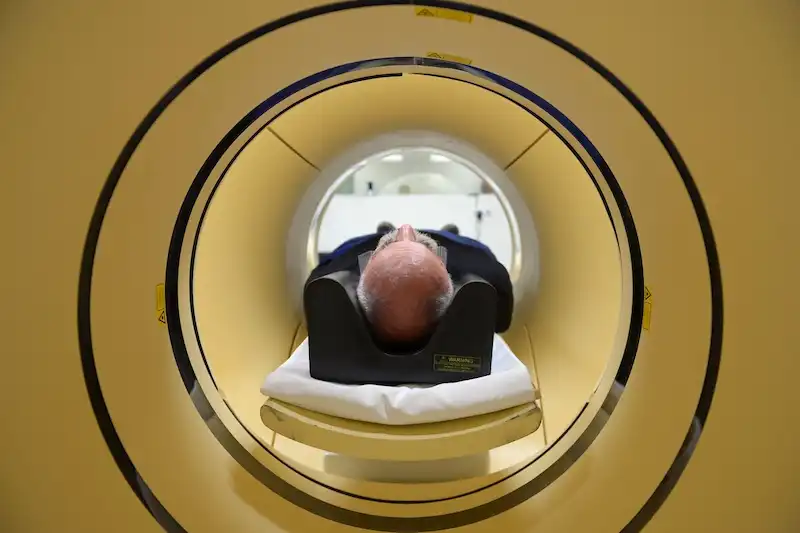


Exciting New Research Sheds Light on Early Detection of Alzheimer's Disease. Recent breakthroughs in Alzheimer's research have brought about the development of disease-modifying drugs that can slow down the progression of this devastating condition. However, there is still a pressing need to identify and treat patients at an even earlier stage, as well as explore other potential drug targets that could yield more significant effects. A new study, conducted over several decades, offers valuable insights into both areas.
Two promising drugs, Leqembi from Eisai and Biogen, and donanemab from Eli Lilly & Co., have shown promising results in reducing the accumulation of amyloid plaques, a characteristic feature of Alzheimer's disease. These drugs have been found to slow down the decline in individuals with mild forms of the disease by approximately 30%. While this is a significant step forward, further progress necessitates a focus on identifying and testing for other factors that contribute to the disease earlier, possibly decades before symptoms manifest. "They’re slowing disease, but they’re not halting it. We’re going to need to target other pathways to achieve better outcomes," explains neuroscientist Keenan Walker from the National Institute on Aging.
Thus far, much of the research beyond amyloid has centered around tau, another protein that forms tangles in the brains of Alzheimer's patients. Targeting amyloid and tau made sense given their visibility on brain scans and blood tests. However, previous studies focusing on amyloid alone revealed that plaques are not the sole culprits, and other processes likely contribute to the memory loss and overall decline in brain function. Identifying and understanding these additional players is now more feasible with advancements in technology.
The recent study offers valuable insights into the early stages of Alzheimer's disease by analyzing a collection of proteins that appear altered in midlife among individuals who eventually develop the condition 15 to 25 years later. Surprisingly, these proteins are not directly linked to amyloid and tau but involve immune processes, nerve cell communication, and protein regulation.
The study capitalized on a long-term research project examining atherosclerosis, which recruited nearly 15,800 individuals aged 45 to 64. Over the years, these participants regularly reported on their health and underwent periodic examinations. As they reached their 70s and 80s, researchers expanded the study to include dementia-related tests, allowing for the tracking of Alzheimer's development among the participants. By utilizing health records, the researchers assembled a group of approximately 11,000 individuals for analysis.
With the help of modern technology, the researchers revisited plasma samples taken decades earlier and conducted a thorough examination of thousands of proteins in each individual's blood to identify associations with later Alzheimer's risk. Several proteins were identified, but one, called GDF15, stood out. Although it has been linked to Alzheimer's and other neurodegenerative diseases, it had never been identified as a dementia predictor before. Further investigation suggests that GDF15 may act as an anti-inflammatory molecule, triggered by some danger and initiating immune responses even in individuals in their 40s. This finding aligns with other genetic studies highlighting the significant role of the immune system in Alzheimer's long before plaques become noticeable on brain scans.
While this study does not offer a definitive early test or identify a target for new drugs, it does pave the way for a deeper understanding of the initial processes that lead some individuals down the path to dementia. This knowledge could lead to the development of more effective diagnostic tools and therapeutic approaches.
For too long, the focus of Alzheimer's research has been solely on amyloid and tau, but breakthroughs in this area have provided an opportunity to explore other factors that contribute to the disease. By expanding our understanding of the early stages, we can bring about more targeted treatments and potentially increase the chances of finding a cure for Alzheimer's.