


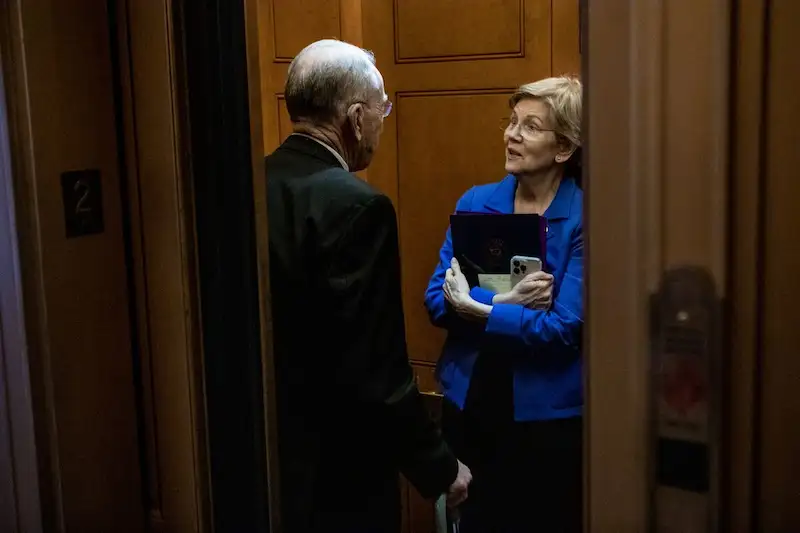


A group of four US senators from both parties is calling for an investigation into whether nonprofit hospitals are abusing their tax-exempt status. The senators, including Elizabeth Warren and Chuck Grassley, expressed concern over cases where nonprofit hospitals have charged full price for services that should have been free or discounted. They also highlighted instances where these hospitals have aggressively pursued indigent patients for medical debt, even going as far as placing liens on their homes.
In the United States, more than half of the approximately 5,200 community hospitals are categorized as nonprofit. These hospitals are granted tax-exempt status on the condition that they provide charity care to the community. However, lawmakers argue that there are no clear rules or standards in place to determine if hospitals are meeting these charity-care guidelines. They claim that the current disclosure requirements are vague, allowing nonprofit hospitals to avoid their responsibilities. On the other hand, the hospital industry has refuted these allegations.
To address these concerns, the senators are urging the government to update the forms that hospitals use to disclose their charity care. They also want to identify hospitals whose tax-exempt status has been revoked, as well as those that have been audited or deemed at risk for non-compliance. By doing so, they hope to bring more clarity and consistency to the process of monitoring and enforcing charity contributions made by nonprofit hospitals.
This issue has not only caught the attention of federal lawmakers but also of states and municipalities. Colorado, for example, recently passed a law that requires nonprofit hospitals to provide more extensive reporting on the community care they offer. Pittsburgh has challenged the tax-exempt status of certain properties owned by the University of Pittsburgh's medical center, leading to a dispute between the two parties. Additionally, in New York City, the establishment of an Office of Healthcare Accountability has been unanimously approved by the City Council. This office will scrutinize hospital pricing and the charity-care provisions that hospitals have in place.
According to a report by the Lown Institute, more than three quarters of the nonprofit hospitals examined spent less on charity care and community investment than the estimated value of their tax breaks. This created a "fair-share deficit" of $14.2 billion in 2020. These findings further emphasize the need for increased oversight and transparency regarding the charity-care obligations of nonprofit hospitals.
In conclusion, there is growing concern among legislators and local authorities about the behavior of nonprofit hospitals and their compliance with charity-care requirements. The senators are calling for a thorough investigation into these hospitals to ensure that they are serving the best interests of patients and the community. In addition, efforts are being made at the state and municipal levels to implement stricter reporting and accountability measures for nonprofit hospitals.