


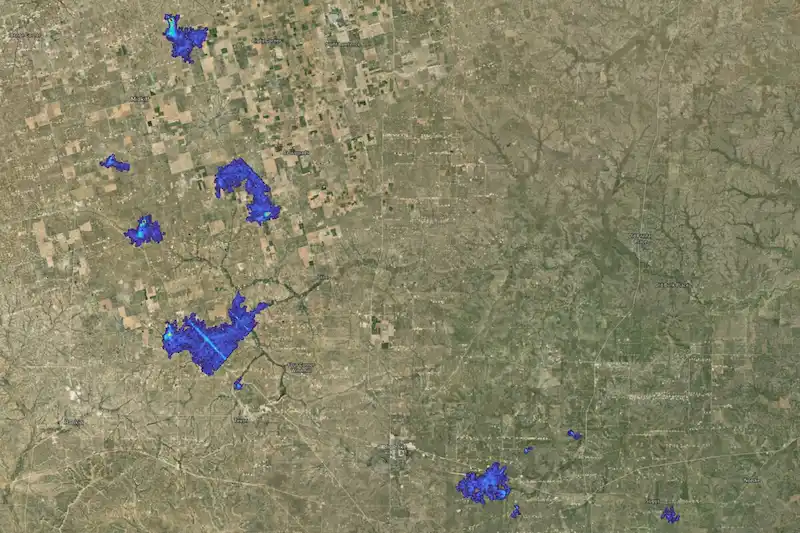


As scorching temperatures broke records and caused havoc across Texas, another serious issue unfolded quietly and unseen. Operators in the largest energy basin in the US, the Permian Basin, were forced to shut down crucial equipment due to the extreme heat, resulting in the release of hundreds of tons of natural gas into the atmosphere. This sudden release of methane, the main component of natural gas, contributed to the growing climate crisis. However, this time, there was a new witness to the damage: a telescope known as EMIT, orbiting the Earth on the International Space Station, captured unprecedented images of the methane emissions during the heatwave.
The EMIT sensor, developed by NASA's Jet Propulsion Laboratory, provided a unique perspective by capturing images of the methane plumes from space, allowing scientists to accurately assess the situation on the ground. During the late June heatwave, Carbon Mapper, a nonprofit organization, analyzed the EMIT data and identified 22 methane plumes in the Permian Basin. These plumes were estimated to release more than 79 metric tons of methane per hour, which is equivalent to the short-term global warming impact of 2.8 million idling cars.
Curbing methane emissions has become a priority for energy policymakers and the oil and gas industry due to its significant contribution to climate change. Methane has more than 80 times the potential to heat the planet than carbon dioxide over a 20-year period. President Joe Biden recently hosted a methane summit, and most large energy companies have made commitments to reduce emissions by upgrading equipment and improving procedures. However, monitoring progress on these promises has been challenging, as methane is invisible and usually released in remote locations.
The analysis of the Carbon Mapper data revealed that pipeline operator Targa Resources Corp. was responsible for the most emissions captured by the EMIT telescope during the June flyover. Targa, one of the largest gatherers and processors of natural gas in the Permian Basin, was likely responsible for eight of the 22 methane plumes, emitting a combined 46 tons of methane per hour. Targa stated that it was not aware of such releases and that their equipment logs indicated the plant was operating normally during that time.
Other companies identified as emitting methane were West Texas Gas Inc., a pipeline operator, and Earthstone Energy Inc., an oil and gas producer. West Texas Gas declined to comment, while Earthstone Energy explained that they had to temporarily burn natural gas at their well sites due to malfunctioning pipeline systems caused by the extreme heat.
It is important to note that the satellite observations by EMIT only capture a fraction of the methane that was released during the Texas heatwave. The sensor scans a small section of the Permian Basin during brief moments while passing by the region. It can only detect the largest methane emissions.
Interestingly, only one of the 22 methane plumes captured by EMIT was reported to state regulators, suggesting that official records significantly underrepresent the actual emissions happening in the oilfield. This could be due to routine activities, emissions not reaching disclosure thresholds, or companies simply being unaware of the releases.
Beginning next year, federal law will require companies in the oil and gas industry to pay fees for excess methane emissions, in an effort to tackle pollution. However, determining the amount of emissions accurately remains a challenge for the Environmental Protection Agency, especially for unpredictable and intermittent events like those witnessed during the June heatwave.
The failures during the Texas heatwave highlight the need for better preparedness of the state's natural gas infrastructure for high temperatures. With the fossil fuel industry playing a significant role in anthropogenic climate change, it is both tragic and ironic that these very companies are now being forced to adapt to the consequences of their own activities.