


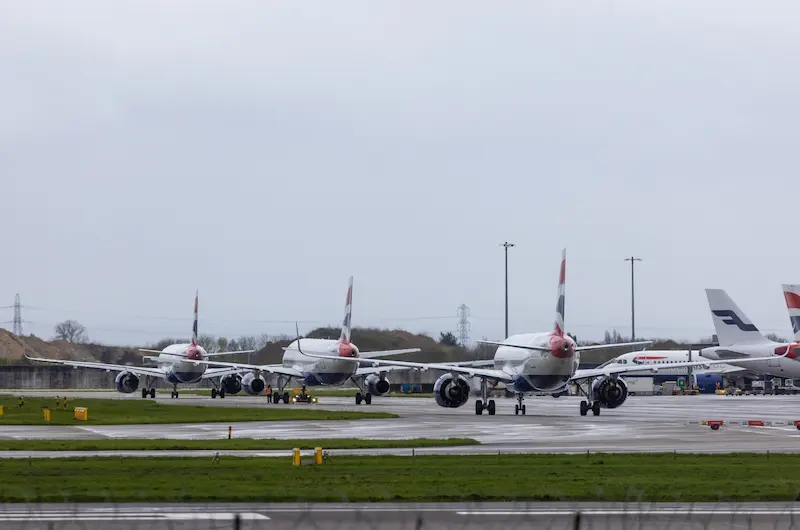


Airlines are working diligently to restore normal flight operations in the UK and safely repatriate stranded passengers following a major air-traffic outage, which caused significant delays and cancellations on one of the busiest travel days of the year. British Airways and EasyJet Plc have advised passengers scheduled to fly on Tuesday to check the status of their flights as they may experience delays or cancellations. Both airlines are offering free flight changes to a later date for passengers scheduled to depart on Monday or Tuesday, with EasyJet also providing the option of refunds.
According to Flightradar24, London Heathrow reported 78 delayed flights and 32 cancellations on Tuesday, a decrease from the more than 170 cancellations experienced on Monday. Gatwick airport, the second major hub in London, had 23 cancellations on Tuesday. While the systems at UK airspace manager NATS have been restored, it may take several days for operations to return to normal as aircraft need to be repositioned. This outage occurred during one of the busiest extended travel weekends, with the UK having a national holiday and many summer vacationers returning home.
Transport Secretary Mark Harper acknowledged the extent of the disruption in an interview on ITV's Good Morning Britain, stating that a disruption of this magnitude hasn't happened in nearly a decade. In total, 790 flights were canceled on Monday, which accounted for approximately 27% of all departures from UK airports. A similar number of incoming flights were also axed, impacting travel plans for many passengers. Ryanair Holdings Plc stated that over 20 of its aircraft were unable to return to their home bases on Monday night.
The cause of the outage has not been disclosed by NATS. However, The Times reported that it may have been the result of an incorrectly filed flight plan by a French airline, although this information has not been officially confirmed. NATS manages the airspace over England and Wales from its central operations room in Swanwick, located about 100 kilometers (60 miles) southwest of London. The system was implemented in 2002, albeit almost five years behind schedule due to software glitches, and went over budget by 30%. The prime contractor for the project was Lockheed Martin Corp.
Passengers are urged to stay updated on their flight status by checking with their respective airlines before traveling to the airports. While the majority of passengers will still be able to travel, some disruptions and flight cancellations are expected on certain routes due to the ongoing recovery process after the outage. The situation serves as a reminder of the importance of preparedness and contingency plans in the face of such technological hiccups in the aviation industry.