


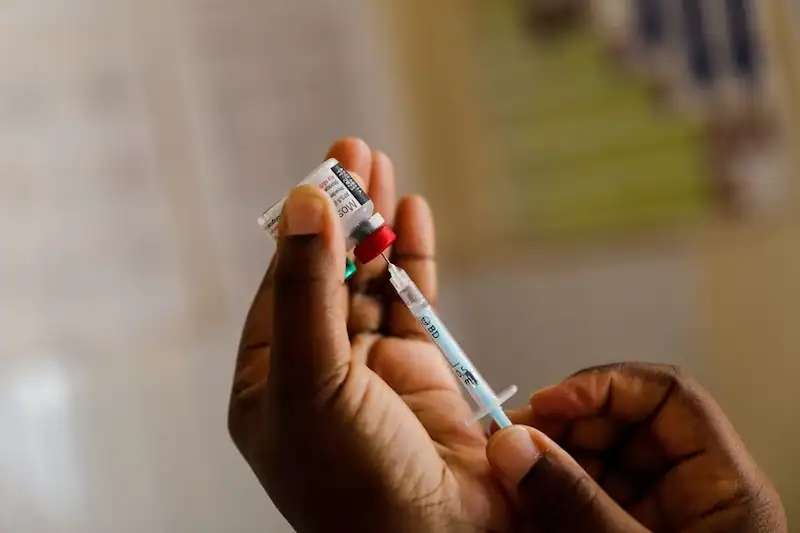


Ghana has made a significant stride in the fight against malaria by approving a new vaccine developed by Oxford University. The vaccine, known as R21, has been approved domestically for children aged between 5 and 36 months who are at the highest risk of death from the disease. This approval is unusual as it comes before the publication of final-stage trial data. The vaccine is yet to be rolled out in Ghana, as other regulatory bodies, including the World Health Organization (WHO), are still assessing its safety and effectiveness.
Malaria is a mosquito-borne disease that kills over 600,000 people each year, with most of the deaths being children in Africa. Vaccines for malaria have taken decades to develop due to the complicated structure and lifecycle of the malaria parasite. The Oxford shot is the second in recent years to be approved for use, with the first being Mosquirix from British drugmaker GSK. However, a lack of funding and commercial potential has limited GSK's capacity to produce as many doses as needed, demonstrating the need for another vaccine candidate.
Oxford University has a deal with Serum Institute of India to produce up to 200 million doses of the R21 vaccine annually. This is a significant development, as it is the first time a major vaccine has been approved in an African country ahead of rich nations, according to Oxford scientist Adrian Hill. Approving a vaccine before the publication of data from final-stage trials is also rare, experts told Reuters.
Ghana uses funding from Gavi, the vaccine alliance, for its vaccine campaigns, although it is moving towards buying its own shots after economic growth in recent years. Dr Derrick Sim, Gavi's managing director of vaccine markets, said the organization is ready to provide funding for R21 if WHO backs it. He emphasized that it is crucial to keep the cost of the vaccine below $3, as Serum has indicated.
The ongoing phase III clinical trial of the R21 vaccine involves 4,800 children in Burkina Faso, Kenya, Mali, and Tanzania. Data from this trial is due to be published in the coming months. Mid-stage data from the trial, involving over 400 young children, was published in September, showing vaccine efficacy of between 70-80% at 12 months following the fourth dose. Hill said the data suggested a similar performance as in the phase II trial and has been shared with regulatory authorities over the last six months.
In conclusion, Ghana's approval of the R21 vaccine is a significant step in the fight against malaria. The vaccine has the potential to save hundreds of thousands of lives, especially those of children in Africa. The approval of the vaccine ahead of rich nations and before the publication of final-stage trial data is a testament to the proactive stance of African regulators.