


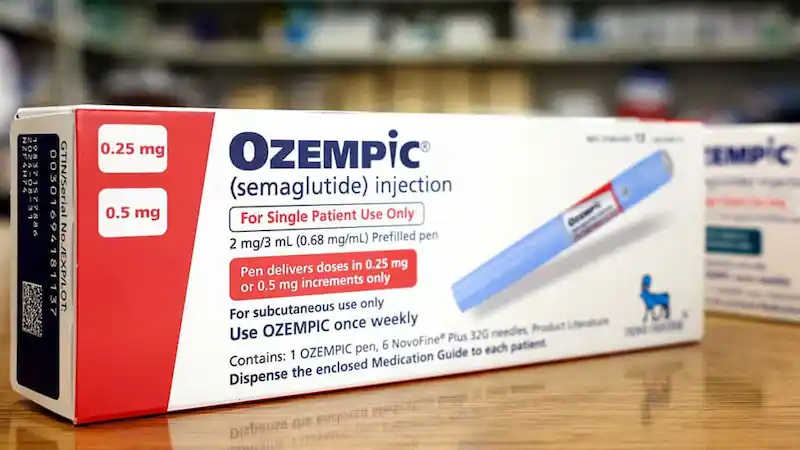


A recent study has unveiled a potential link between popular weight loss medications and serious digestive problems. Drugs such as Wegovy, Ozempic, Saxenda, and Victoza, which are often administered via injection, have been found to carry a higher risk of stomach paralysis, pancreatitis, and bowel obstructions compared to other types of weight loss medications.
While the study found that the incidence of these events in individual patients was relatively rare (around 1% of those taking Ozempic were diagnosed with stomach paralysis), the sheer number of people using these drugs globally could still amount to hundreds of thousands of new cases. This surge in demand for weight loss medications has led researchers to shed light on the potential risks associated with them.
It is crucial to note that the identified risks are far from mild. Bowel obstructions, for instance, can pose serious medical emergencies. Previous reporting has drawn attention to cases of stomach paralysis in individuals who had taken these medications, highlighting the lack of warning provided to patients about this specific side effect.
The prescribing information for Wegovy, Saxenda, Ozempic, and Victoza does include warnings about various serious side effects, such as pancreatitis, gallbladder problems, blocked intestines, kidney issues, severe allergic reactions, increased heart rate, suicidal thoughts, and changes in vision. Recently, a warning about ileus, or blocked intestines, was added to Ozempic's label. The labels also mention common side effects like nausea, vomiting, and constipation. They strongly caution individuals with a history of certain types of hereditary thyroid cancers against taking these medications.
To conduct this study, researchers from the University of British Columbia analyzed a random sample of over 16 million insurance claims between 2006 and 2020. They focused on patients who had been prescribed two injected drugs—semaglutide and liraglutide—both of which are GLP-1 agonists that slow down food passage through the stomach. These drugs are helpful for individuals with diabetes in controlling blood sugar levels and can lead to significant weight loss in individuals with or without diabetes.
In 2021, semaglutide (branded as Ozempic for diabetes and Wegovy for weight loss) gained FDA approval for weight loss treatment in non-diabetic individuals with obesity. Liraglutide, approved by the FDA as a weight loss medicine since 2014, is known as Victoza for diabetes and Saxenda for weight management. However, even before receiving official approval for weight loss, doctors had been prescribing these drugs off-label to patients in need of shedding pounds.
The researchers compared the frequency of serious digestive problems in patients taking the injected drugs to those taking a different type of weight loss medication called bupropion-naltrexone, marketed as Contrave. Their analysis revealed that individuals taking Ozempic and Saxenda were significantly more likely to develop severe stomach and intestinal problems compared to those taking Contrave.
In absolute terms, the incidence of new cases of stomach paralysis was around 1% for those taking Ozempic, 0.7% for Saxenda users, and 0.3% for those on Contrave. This demonstrates that people taking the injected drugs were over three times more likely to develop stomach paralysis compared to those taking Contrave.
While no bowel obstructions were observed in the Ozempic group, the study found a 0.8% incidence in Saxenda users and a 0.17% incidence in Contrave users. This implies that people taking the injected medications were more than four times more likely to experience bowel obstructions compared to those on Contrave.
Regarding pancreatitis, the incidence was 0.5% for Ozempic users, 0.8% for Saxenda users, and just 0.01% for Contrave users. This represents a more than ninefold increase in the risk of pancreatitis for individuals taking the injected drugs compared to those taking Contrave.
However, it is important to note that this study is observational and, therefore, can only establish associations rather than proving causation. Nonetheless, the researchers aimed to account for potential biases and confounding factors to provide a clearer picture of the relationship between these medications and digestive problems.
While the study has its limitations, experts who were not involved commend its execution, although they believe it may not be the final word on the matter. It highlights that GLP-1 agonists are generally well-tolerated but carry a low incidence of serious side effects. Previously, it was unclear whether patients taking these drugs for weight loss faced the same risks.
Novo Nordisk, the manufacturer of Ozempic and Saxenda, emphasizes its confidence in the safety and effectiveness of its GLP-1 medications when used according to product labeling. They recommend that patients take these medications under the supervision of healthcare professionals, who can assess the appropriateness of using GLP-1 based on individual medical profiles.
The study's authors suggest that regulatory agencies and drug manufacturers should consider updating the warning labels of these medications to include the risk of gastroparesis. By doing so, patients can seek timely medical attention and avoid serious consequences.
In conclusion, while weight loss medications may present risks such as severe digestive problems, it is essential to consider the potential benefits they offer in addressing obesity-related health risks. The decision to use these medications should be made in consultation with healthcare professionals, weighing the risks against the benefits according to an individual's medical condition and needs.