


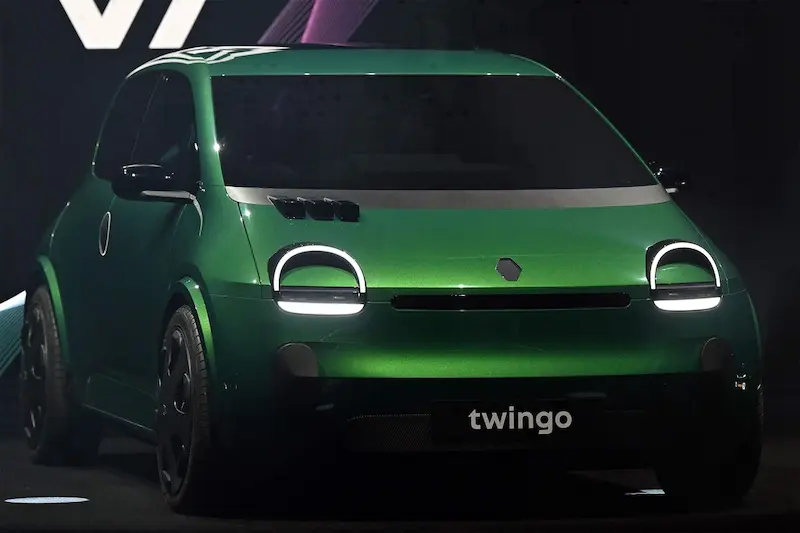


Renault SA, the French carmaker with a rich history, is embarking on a bold venture to accomplish something that has proven challenging for the industry as a whole: building affordable electric vehicles (EVs) and making a profit from them. Inspired by its founder's past success, Renault is now looking to replicate that achievement in the electric vehicle market.
On Wednesday, Renault unveiled its latest offering, a battery-powered Twingo, which is expected to have a price tag of less than €20,000 ($21,700). The redesigned city car draws inspiration from the popular model introduced in the 1990s and will strongly compete with similar EVs from Stellantis NV, Volkswagen AG, and emerging Chinese carmakers in a region grappling with a cost-of-living crisis.
Renault's CEO, Luca de Meo, believes that the Twingo will be a "game-changer" just like its predecessor 30 years ago. The company's aim is to make electric vehicles accessible and profitable, addressing the challenges faced by consumers in terms of affordability. This move also aligns with the core strategy of Ampere, Renault's EV and software business unit, which is slated for an IPO next year to secure funds for the carmaker's reinvention plans.
During an investor event, de Meo outlined Ampere's roadmap, targeting a break-even point by 2025 and an operating margin of approximately 10% within the next five years. Achieving these goals will involve streamlining the supply chain, optimizing production processes, and leveraging Renault's existing manufacturing and procurement scale. In addition, longtime partner Nissan Motor Co. and Mitsubishi Motors Corp. have committed to investing up to €800 million in Ampere, and there are ongoing discussions with Qualcomm Inc. for further collaboration.
However, Renault's IPO plans for Ampere may face challenges in a challenging market environment, exacerbated by an intense price war in the EV sector. Industry analysts have expressed doubts about Renault's ability to rapidly bring affordable EVs to market, pointing out the broader setbacks faced by the industry. While low-cost electric cars have primarily been confined to small models with limited range in China, Renault aims to break that mold and offer truly affordable options.
Major players such as Tesla and Volkswagen have faced their own hurdles in delivering on their promises of affordable EVs. Notably, Tesla has yet to deliver on its plans for a $25,000 model, while Volkswagen has faced a slump in demand for its EVs and has had to make adjustments in its production workforce. The profitability of inexpensive electric models from China's BYD Co., the only major automaker currently making substantial profits from EVs, is also unclear.
Renault has a long-standing history of manufacturing affordable cars, with iconic models like the 4CV and the R5. In recent years, the company marketed the Dacia Spring as Europe's most affordable EV, although it was manufactured in China. By producing the new Twingo in Europe, likely in Slovenia, Renault aims to continue its tradition of offering affordable EVs to European consumers.
While some investors remain skeptical about the viability and profitability of EVs priced between €20,000 and €25,000, Renault's plan for Ampere is well-conceived. UBS analysts have highlighted the lack of sufficient evidence regarding the success of this pricing strategy. While the new Twingo has garnered praise from Bernstein's Daniel Roeska and the overall potential of Ampere as a business is impressive, skepticism lingers about the necessity of an IPO.
De Meo has acknowledged these reservations and stated that the Ampere listing may be postponed if the anticipated valuation of €8 billion to €10 billion isn't met. Nevertheless, he believes that going public is important to foster a culture of performance and transparency within Ampere, but not at any cost.
Renault's ambitious plans to build affordable electric vehicles and make them profitable are indeed a daring gamble. The success of their strategy remains to be seen, as the industry grapples with challenges related to technology, production scalability, and market demand. Nonetheless, if Renault can deliver on its promises, it may become a pivotal player in the global shift towards electric mobility.