


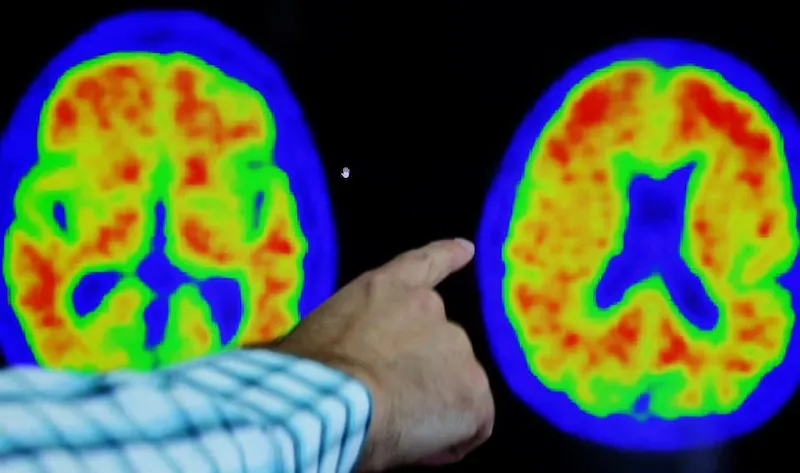


Breakthrough treatments that effectively remove toxic proteins from the brain, revitalizing interest in the search for Alzheimer's vaccines, could potentially provide a cheaper and easier solution for millions impacted by the memory-robbing disease. This comes as clinical trials are already underway or completed for at least seven Alzheimer's vaccines, designed to harness the immune system's potential in eliminating disease-related proteins such as beta amyloid and tau, according to a review of the U.S. government's ClinicalTrials.gov database. The resurgence of interest in Alzheimer's vaccines follows a progressive attempt made over two decades ago that was halted due to a potentially life-threatening brain inflammation known as meningoencephalitis, which affected 6% of volunteers.
In response to the challenges faced with the initial vaccine attempt, researchers opted for a safer approach involving the infusion of highly targeted man-made antibodies into patients, effectively circumventing the body's immune system. The recent success of Eisai and Biogen's Leqembi, as well as Eli Lilly's donanemab, has cemented the belief that the removal of amyloid is key in combating Alzheimer's in individuals with early-stage disease. Prior to this triumph, several failures left numerous experts questioning the validity of the amyloid theory.
Scientists, including those from Vaxxinity, AC Immune, and Prothena, now claim to have identified the shortcomings of the initial vaccine attempt and are currently testing new shots aimed at provoking an immune response without causing excessive inflammation. The U.S. Food and Drug Administration (FDA) has already granted fast-track status to the first two vaccines, expediting their review process.
Dr. Reisa Sperling, an Alzheimer's researcher at Mass General Brigham, asserts that vaccines will play a crucial role in Alzheimer's prevention. She is currently leading a trial involving cognitively normal individuals who possess Alzheimer's proteins in their brain, and is considering the use of vaccines in her next study involving asymptomatic individuals who exhibit Alzheimer's proteins in their blood, albeit at levels that are not yet detectable on brain scans.
The development of Alzheimer's vaccines is still in its early stages and will require extensive, long-term trials to demonstrate their efficacy. However, if successful, a vaccine administered on a quarterly or biannual basis could offer a more accessible alternative to Leqembi's expensive twice-monthly infusions, thereby expanding its availability to the estimated 39 million people globally affected by Alzheimer's.
Vaxxinity appears to be leading the field, having already completed a small Phase 2 trial of its vaccine, UB-311. Mei Mei Hu, CEO of Vaxxinity, emphasizes that Leqembi's triumph has validated a long-debated hypothesis. The Phase 2a trial involving 43 volunteers in Taiwan demonstrated that the vaccine was safe and well-tolerated after 78 weeks, with nearly all participants producing an immune response. While no cases of brain swelling were observed, 14% of participants experienced brain bleeding, a side effect also common among infused treatments.
Vaxxinity has been actively seeking a partner to help finance a larger, confirmatory trial, but interest has been lacking over the past few years. Hu states that "the gates have opened" with Leqembi's approval, sparking renewed enthusiasm and increased investment in the field.
The initial Alzheimer's vaccine demonstrated some signs of benefit, but also triggered an uncontrolled response from T-cells, a component of the immune system intended solely for destroying infected cells. Most contemporary vaccines, however, specifically target B cells, which produce antibodies.
AC Immune's vaccine exclusively activates B cells, as affirmed by Dr. Michael Rafii from the University of Southern California. In a Phase 1 trial led by Rafii, AC's vaccine showed no evidence of meningoencephalitis, although only a subset of participants displayed an immune response. The company is currently testing a reformulated version, with additional data expected in the first half of 2024.
AC Immune is also collaborating with Johnson & Johnson on a tau-targeting vaccine, as tau is a toxic protein linked to Alzheimer's and associated with brain cell death.
Prothena, which emerged as a spin-off from a company involved in developing the first Alzheimer's vaccine, aims to commence a trial next year for their vaccine that targets both amyloid beta and tau, with the goal of Alzheimer's prevention. Prothena also has an anti-amyloid antibody currently undergoing Phase 1 trials and an anti-tau antibody licensed to Bristol Myers Squibb.
Gene Kinney, CEO of Prothena, emphasizes that their vaccine generates high levels of mature antibodies, a critical factor for vaccines administered to older individuals with weaker immune systems. He believes that vaccines are ideal for individuals with pre-symptomatic Alzheimer's, as the goal is to prevent the disease from occurring in the first place.