


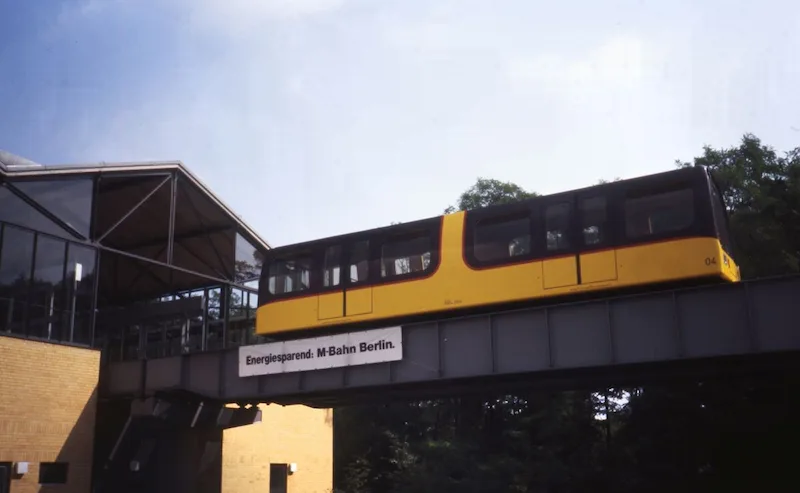


Berlin's Christian Democrats, the largest party in the city's ruling coalition, have proposed a plan to introduce magnetic-levitation (maglev) trains for public transit. The party is suggesting the construction of a test track for driverless maglev trains, estimated to cost €80 million ($87.5 million). If successful, this could potentially lead to the implementation of maglev train systems for both passengers and freight throughout the city.
While maglev technology is not commonly used for urban transit, the Christian Democrats argue that building maglev tracks would be faster and cheaper compared to other alternatives. However, this proposal has received mixed reactions from passenger groups and sustainability advocates in Berlin, with some expressing skepticism rather than applauding the idea.
Maglev technology has been around for decades and operates by using electromagnets to suspend the train above the guideway, resulting in high-speed operation and potential energy efficiency advantages. Currently, there are only a few commercial maglev tracks in operation worldwide. Interestingly, Berlin had a brief experience with maglev technology in the past. From 1989 to 1991, the city had a functioning maglev service called the M-Bahn, serving three stations along the western side of the Berlin Wall. However, it was dismantled after reunification made it unnecessary.
Critics argue that resurrecting maglev technology for urban transit is unnecessary and wasteful. The leader of the city's passenger association called it a "completely pointless stunt," while a professor at Berlin's Technical University questioned the city's exploration of a technology with dubious benefits when it still faces transit network issues.
Experts argue that Berlin already has a reliable and efficient transport system, including an extensive subway network. While some areas lack last-mile options, proposals to improve existing infrastructure, such as extending subway lines to the airport, are already being considered.
The skepticism towards grand transit plans in Berlin stems partially from past experiences, such as the long-delayed opening of the city's malfunctioning airport in 2020. Additionally, the Christian Democrats' track record with public transit has raised doubts. Since becoming the largest party in the ruling grand coalition, they have canceled plans for new bicycle lanes, increased individual ticket fares, caused major delays in tram expansion, and disregarded plans to improve commuter ferries on the city's lakes. Furthermore, transit workers have expressed discontent due to "intolerable conditions" resulting from antisocial behavior and drug use in the subway.
Overall, the proposal to introduce maglev trains in Berlin has faced criticism from experts, passenger groups, and sustainability advocates. Many argue that the city should focus on improving its existing transit network rather than investing in a technology that may not provide substantial benefits.