


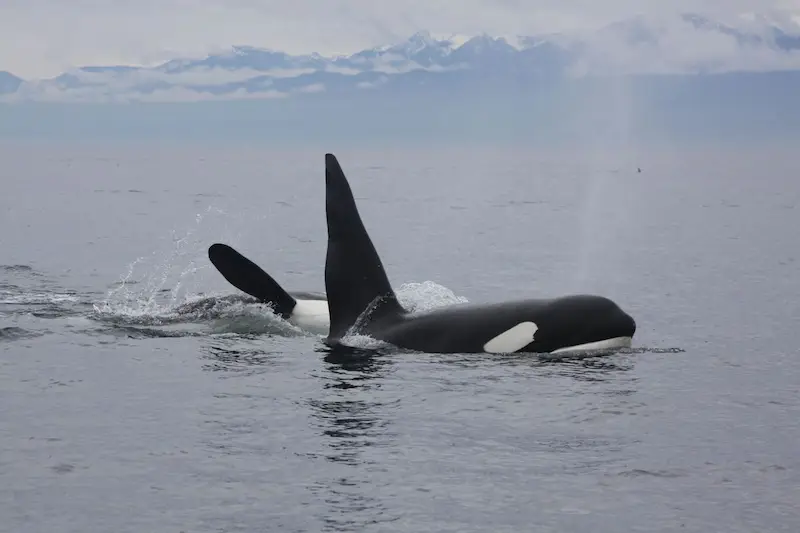


The toxic smoke from climate-driven wildfires is posing a significant threat to killer whales off the west coast of North America, according to a groundbreaking study by researchers at the University of British Columbia. The study found that polycyclic aromatic hydrocarbons (PAHs) from petrogenic sources, such as oil spills and burning fossil fuels, as well as pyrogenic sources like forest fires, are contaminating the muscle and liver tissues of two types of endangered killer whales.
The critically endangered Southern Resident killer whales, found along the coast between Washington state and British Columbia, were found to have PAHs from petrogenic sources in their systems. With only 75 individuals left in the population, their vulnerability to pollution from fossil fuel refineries, vehicle emissions, and oil spills is a grave concern. Alarmingly, the researchers also discovered that these apex predators are transferring carcinogenic PAHs to their unborn calves, further endangering the population's survival.
The marine mammal-eating Bigg's killer whales, also known as transient killer whales, were found to have PAHs associated with forest fires and other pyrogenic sources. This species, considered threatened in Canada, roams the Pacific Ocean from Alaska to Mexico and tends to live away from coastal infrastructure. However, the wide reach of wind-blown wildfire smoke exposes them to the threat of PAH contamination regardless of their migratory patterns.
The study highlighted the impact of wildfires in California on the Bigg's killer whales, as the state has been heavily impacted by these fires. While it is challenging to directly attribute the PAH contamination to wildfires, as polycyclic aromatic hydrocarbons can also be present in the burn of wood, grass, and coal, the characteristic fingerprint found in the Bigg's orcas points to forest fire smoke carried by the wind to their remote habitats.
The extent of PAH poisoning in killer whale populations remains uncertain, as do the precise health impacts. However, previous research has linked PAH contamination to cancer in Canadian beluga whales. The research team collected tissue samples from twelve killer whales that washed ashore in British Columbia between 2006 and 2018, before the recent record-breaking wildfires ravaged vast areas of California and the Pacific Northwest. The wildfires in 2023 alone burned an area the size of North Dakota, exacerbating the pollution from PAHs.
This study sheds light on a class of contaminants that have not been heavily studied in whales, offering a crucial addition to existing research focused on toxic chemical compounds like polychlorinated biphenyls (PCBs). The findings emphasize the urgent need for policymakers to consider the implications of oil and pipeline development along the coast, particularly for the critically endangered Southern Resident killer whale population.
Climate change, with its intensification of wildfires, is compounding the issue as smoke from the fires accumulates in the atmosphere and travels over long distances, including the habitats of killer whales. The researchers emphasize that the impact of PAH contamination on these marine mammals is likely to worsen if wildfires continue to increase in frequency and intensity.
The study serves as a wake-up call about the threats posed by wildfire smoke to killer whales, underscoring the urgent need for action to reduce both the frequency of wildfires and the sources of pollution that contribute to PAH contamination in their habitats. By addressing these issues, policymakers can strive to protect the vulnerable killer whale populations and safeguard the health of our oceans.