


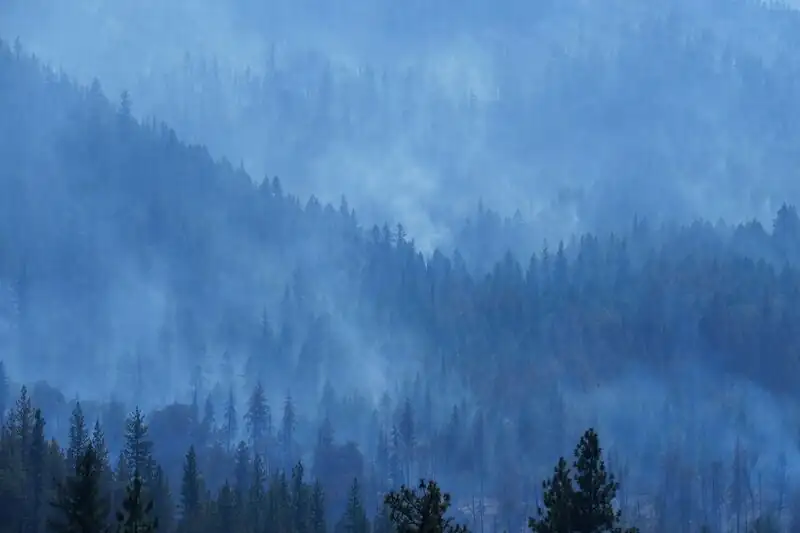


According to a study published in the Proceedings of the National Academy of Sciences, forests in the Western United States are not evolving quickly enough to adapt to the current rate of climate change. This could have negative impacts on carbon storage, biodiversity, and the overall health of forests. The study found that while forests are evolving to handle warmer temperatures, also known as "thermophilization," the rate of this transformation is lagging behind climate change by roughly tenfold. This means that forest trees are becoming increasingly mismatched with their environment, making them more susceptible to death or damage from fire or insect infestations.
Researchers from the University of California at Berkeley and the US Forest Service analyzed the composition of approximately 50,000 forest plots in the Western states over 10-year periods. They found that trees with a greater tolerance for higher temperatures and dryer weather, like the California juniper, are gaining in dominance. However, the climate change is outpacing those adaptations. Additionally, the ratio of trees is shifting without new species coming into the forests. Instead, established species that prefer colder and wetter conditions, such as Douglas fir, are dying or being weakened and attacked by insects. This could lead to significant ecological changes over centuries or perhaps even decades, with forested areas being replaced by grassland.
The US has more than 32 million acres of old-growth forests on public lands, which are valuable for their ability to store a large amount of carbon. While President Joe Biden's administration is expected to use information from a recent survey of these forests as the basis for a new forestry policy that protects more old growth timber from logging, the study shows that stopping logging alone may not be nearly enough. Recent wildfires and beetle infestations have already decimated millions of acres of trees, driven in part by rising temperatures. The type of forest that remains may be very different, which could have drastic impacts on the people and animals that depend on them. Adaptation to these changes will be necessary.