


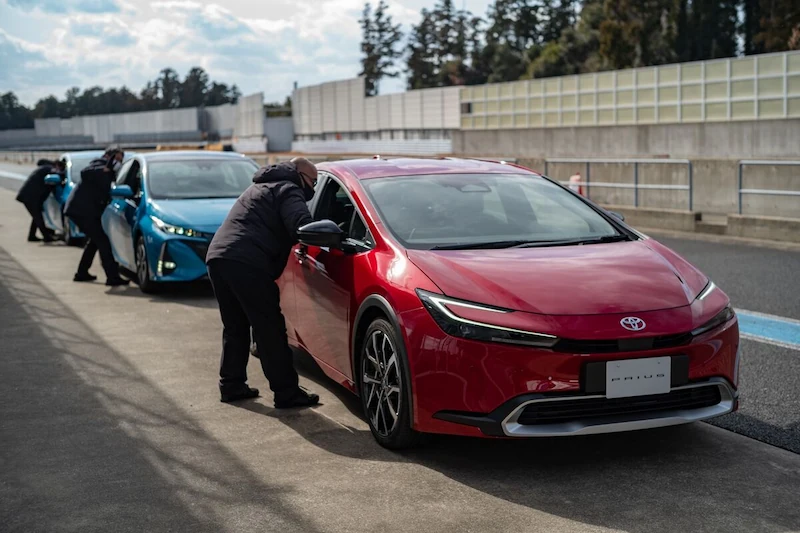


In 1997, Toyota took a gamble by introducing the world's first hybrid gasoline-electric vehicle, the Prius. Back then, the company faced a loss on every Prius sold. However, fast forward to today, and booming sales in the hybrid category are proving to be a much-needed cash boost for Toyota.
Recently, the world's largest automaker announced an annual operating profit of ¥5 trillion ($32 billion), a historic milestone for any Japanese company. What's more impressive is that Toyota achieved an industry-leading profit margin of 11.9%. This success can be attributed to the significant rise in hybrid sales, which jumped 32% to 3.59 million units. Remarkably, hybrids now account for one-third of all cars sold by Toyota.
As the transition to fully electric vehicles is taking longer than anticipated, consumers are voting for hybrids with their wallets. This trend provides an opportunity for car manufacturers like Toyota and Honda to accumulate cash that can be reinvested in the long and steady transition to fully electric cars.
Remarkably, the profitability of Toyota's hybrids has caught up with, and in some cases surpassed, gasoline-engine cars. Masahiro Yamamoto, an operating officer in the accounting group, revealed at Toyota's post-results briefing that the more hybrids they sell, the more they contribute to profitability. Now, thanks to advancements in manufacturing technology, the cost of producing hybrid vehicles is only one-sixth of what it was when the Prius was first introduced.
Looking ahead, Toyota forecasts hybrid vehicle sales of 4.48 million units in the current fiscal year through March 2025. This strong projection makes it highly likely that Toyota will surpass its goal of selling 5 million units of hybrids even before next year.
Honda, too, has experienced an improvement in the profitability of its hybrids. During the carmaker's earnings news conference, CEO Toshihiro Mibe stated that Honda's four-wheeler business, excluding electric vehicles, is expected to achieve an operating profit margin of approximately 8% this fiscal year. This is a significant improvement compared to the 4.1% margin reported last year. Mibe went on to emphasize that hybrids have become highly competitive, even in terms of cost efficiency.
Following suit, Nissan Motor Co. plans to capitalize on the growing hybrid market. The company's medium-term management plan, announced in March, includes the introduction of models featuring its proprietary "e-Power" hybrid technology in the US market by fiscal 2026.
It's not just Japanese automakers embracing hybrids. Even companies like Ford Motor Co. and Hyundai Motor Co. are shifting their focus towards hybrid vehicles. Ford is doubling the production of hybrid versions of its popular F-150 pickup truck, while Hyundai is reportedly equipping its new electric vehicle plant in Georgia to manufacture hybrids as well.
Even smaller Japanese automakers, such as Mazda Motor Corp., are joining the hybrid trend. Mazda's President, Masahiro Moro, recently announced plans to develop hybrids using their SkyActive engines to enhance the performance of their CX-5 models. Moro highlighted the significant shift in perception surrounding hybrids, with media, investors, and dealers all showing a keen interest in the technology.
In summary, the hybrid car market is experiencing substantial growth, leading to increased profitability for automakers. Toyota, Honda, and other manufacturers are capitalizing on this trend, accumulating cash that can be utilized to fuel the transition to fully electric vehicles. With hybrids now equalling or surpassing the profitability of gasoline-engine cars, the future looks promising for this transitional technology.