


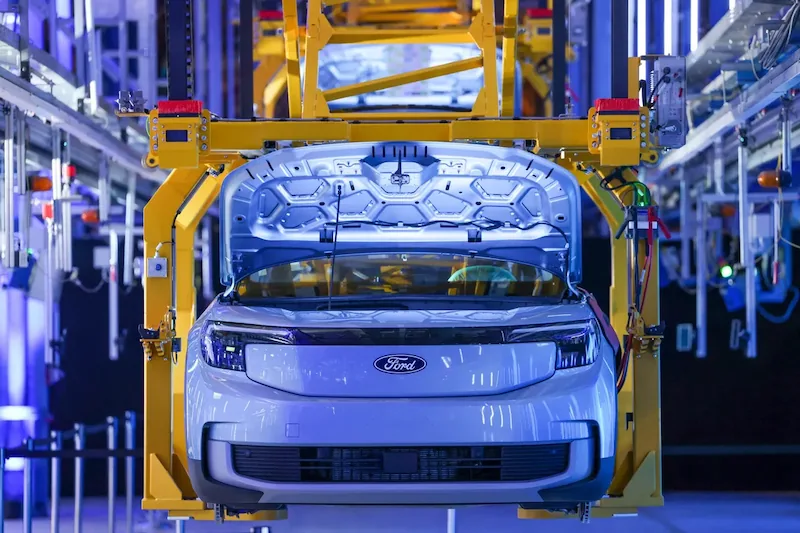


In a move to consolidate its operations in Europe, Ford Motor Co. has announced plans to eliminate 4,000 positions in the region, comprising about 14% of Ford Europe's workforce. The job cuts will primarily impact operations in Germany and the UK by the end of 2027, pending consultations with unions and governments. The automaker also disclosed its decision to scale back production of Explorer and Capri electric vehicles at its Cologne facility in Germany.
This decision comes amid challenges in Ford's transition to electric vehicles in Europe. Despite previously stating its commitment to going almost entirely electric by the end of the decade, the company has faced setbacks, including a prior round of job cuts totaling 3,800 positions in early 2021. Ford's struggles in Europe have been mirrored by industry peers such as Volkswagen AG and Stellantis NV, both of which have issued profit warnings due to slowing vehicle sales and reduced government support for electric vehicle purchases.
John Lawler, Ford's vice chairman and chief financial officer, emphasized the need for a clearer policy agenda to facilitate the advancement of e-mobility in Europe. Lawler called for increased public investment in charging infrastructure, more substantial incentives for electric vehicles, and greater flexibility in CO2 emissions-reduction targets, which are becoming more stringent in the EU and UK next year.
The announcement of the job cuts has had a negative impact on Ford's stock, with shares falling as much as 3.5%. The company's share of Europe's passenger car market has also declined, dropping to 3.3% in the first nine months of this year from 4.1% during the same period last year. Despite this, Ford remains competitive in the commercial vehicle segment, which will take longer to transition to electrification.
Ford's CEO Jim Farley has been focused on streamlining operations and cutting costs to enhance the company's competitiveness. Lawler highlighted the importance of addressing Ford's cost structure, aiming to reduce the $7 billion cost gap with competitors.
The job cuts in Germany, the UK, and the rest of the region reflect Ford's need to adapt to the changing market dynamics and increased competition. Peter Godsell, vice president of human resources, acknowledged the challenges faced by the company and emphasized the necessity of these actions given the current situation.
The decision to reduce the workforce adds to the woes of Germany's struggling industrial sector. With economic experts predicting a second year of contraction and minimal growth in the coming years, the job cuts at Ford symbolize the wider challenges facing the country's industrial base. As Ford implements short-time working days and plans to halt production at its Saarlouis factory, it joins a growing list of companies in Germany, including Volkswagen and major suppliers, that are grappling with restructuring and job losses in response to market pressures.