


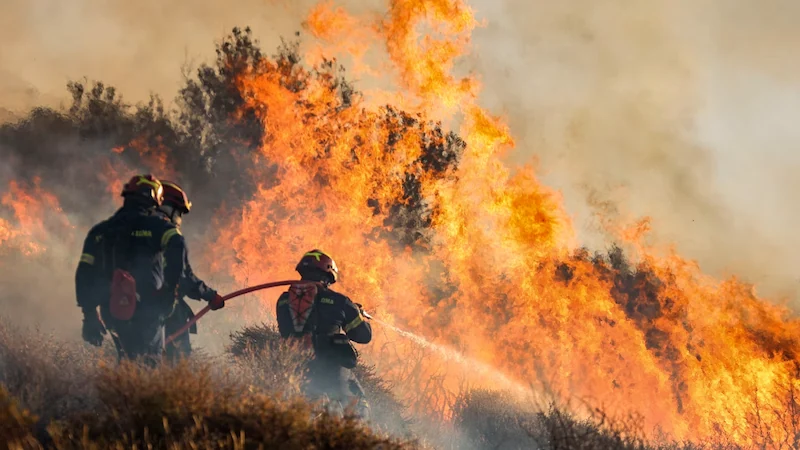


A wildfire that began near the coastal town of Ierapetra on the southeastern edge of Crete has spiraled out of control, despite desperate efforts by more than 200 firefighters. Greece’s largest island, famous for its beaches, rugged hills, and constant tourist foot traffic, is now facing another brutal reminder of a worsening fire season.
The blaze ignited Wednesday afternoon, catching many locals and visitors off guard. Within hours, driven by scorching heat and winds howling at nearly 80 kilometers per hour, flames moved quickly over dry, brush-covered hills, down toward homes and holiday accommodations.
The timing couldn’t have been worse. Temperatures were already hovering several degrees higher than seasonal averages—just hot enough to make everything feel brittle and combustible. And when the wind picked up, the situation escalated quickly. By Thursday, authorities had ordered evacuations across four settlements, including tourist villas, family homes, and remote farming areas. Around 1,500 people have been moved so far, most toward the center of Ierapetra, where emergency shelters have been set up.
In one local gymnasium-turned-refuge, rows of cots and mats cover the floor. A mixture of weary tourists, elderly residents, and families with small children sit in clusters, clutching their phones, bottles of water, and pets. Some haven’t slept since the evacuation, watching the red glow on the horizon and waiting for updates. Volunteers bring in sandwiches and blankets. There's a quiet hum of stress and fatigue.
“We barely had time to pack,” said one German tourist, holding his daughter close. “Smoke came over the hill, and within half an hour, we had to go.”
The firefighting force is stretched thin. According to authorities, more than 230 personnel are on the ground with 46 engines and water-dropping helicopters attempting to hold the fire line. But they’re facing new flare-ups constantly. “The wind keeps shifting, and the fire doesn’t stay in one place,” said Fire Department spokesperson Vasilios Vathrakoyannis. “These aren’t normal conditions. July is always hot, but this… this is different.”
And it's not just Crete. Across the Mediterranean, similar scenes are playing out. In Turkey, tens of thousands have been evacuated from areas scorched in the Izmir, Manisa, and Hatay provinces. Nearly 200 homes have been lost there. In Spain and France, firefighters are also locked in intense battles against rapidly spreading flames. Tragically, two deaths were reported in Spain as a result of the fires.
While summer wildfires are nothing new in Southern Europe, the tone this year is more anxious. Scientists continue to point to climate change as a key driver—longer dry seasons, hotter days, and unpredictable winds all create a tinderbox effect. “Each year, it gets a little worse,” a local Crete resident remarked. “We used to get nervous in August. Now July is terrifying.”
Local officials warn that conditions will remain dangerous through the weekend. For those in shelters, the wait continues. And for firefighters on the front lines, the fight is far from over.