




It started with murmurs in April, then quieted for a bit — until now. President Donald Trump is once again putting tariffs on center stage, this time taking aim at copper imports and goods from Canada. It’s the kind of move that jangles the nerves of global markets and catches even seasoned traders off guard. Just as the world seemed to be adjusting to his earlier trade curveballs, he’s launched a fresh round — and this one’s got sharper teeth.
Beginning August 1, copper imports into the U.S. will be slapped with a 50% tariff. That’s not a typo — fifty. For an industrial metal that’s practically the bloodstream of infrastructure — used in electrical systems, heavy machinery, plumbing — the price tag just got heavier. And that cost? It won’t stay on the docks. It'll trickle straight into construction projects, manufacturing costs, and likely consumer prices too.
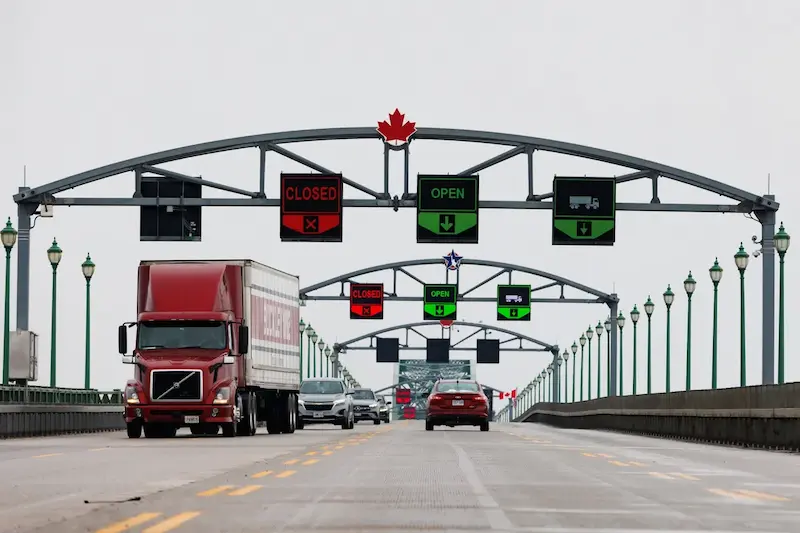
But that’s not where it ends. Canada, usually a calmer partner in the U.S. trade dance, is now under threat of a 35% tariff on select goods. Which ones? Trump didn’t say. That’s part of the uncertainty — and the leverage. When asked, he vaguely added that many U.S. partners may soon find themselves hit with “blanket tariffs” ranging from 15% to 20%, whether they know it yet or not. It’s a global policy shift being drafted with a marker, not a pencil.
Brazil, for example, found itself in Trump’s crosshairs not because of any direct trade imbalance but due to its domestic political turmoil. The U.S. president openly linked a potential 50% tariff on Brazilian goods to their internal issues — a jaw-dropping use of trade as a diplomatic hammer.
Markets, as expected, flinched. Copper futures jumped, analysts scrambled to recalculate supply chain disruptions, and manufacturers began quietly dialing suppliers, bracing for a new pricing reality. No one knows yet whether the tariffs will hit raw copper only or extend to finished products — like wiring, tubing, motors. The lack of detail only adds to the churn.
Even while pushing tariffs, Trump hinted at negotiations. He said the August 1 date isn't "100% firm" and noted he’s open to revisiting rates — a glimmer of unpredictability masquerading as flexibility. Some insiders read that as a classic Trump strategy: threaten hard, then backpedal just enough to force concessions.
Meanwhile, central banks across the world are watching the chaos spill across borders. In Australia, the Reserve Bank held rates steady at 3.85% — a surprise, given most expected a cut to counter the global slowdown. Israel, New Zealand, Peru, and others followed suit, signaling caution amid growing uncertainty. Uruguay and Malaysia did cut rates, but theirs were smaller, more conservative moves.
Back home, the latest U.S. jobs report added another layer of concern. Private payrolls grew by only 74,000 last month — barely a pulse compared to May. And when you peel away health care and social assistance jobs, there’s not much left: just 15,000 new roles across all other sectors. Not exactly a roaring engine of growth.
The UK isn't faring better. With its economy shrinking for a second straight month, and under the weight of U.S. tariffs and domestic tax hikes, the mood is bleak. GDP slipped 0.1% in May — a modest number on paper but ominous when viewed in context. European officials, like ECB’s Isabel Schnabel, insist inflation needs to drop much further before borrowing costs come down, even as consumers flinch.
Even Japan’s famously resilient carmakers are feeling the squeeze. To stay afloat under Trump’s tariffs, they’re now exporting vehicles to North America at steeply reduced prices. Last month saw a 19.4% year-over-year price drop — the biggest since 2016.
And gas? Germany’s storage sites are suddenly hot property again, after a lull that stretched into spring. Traders are snapping up supply, perhaps sensing that the calm might not last. After all, in a world where trade can be weaponized overnight, it pays to stay one step ahead — or at least, try to.
So here we are again. Another wave of tariff threats. Another round of global second-guessing. And another chapter in the long, unsteady story of economic brinkmanship that has come to define Trump's approach to international trade.