


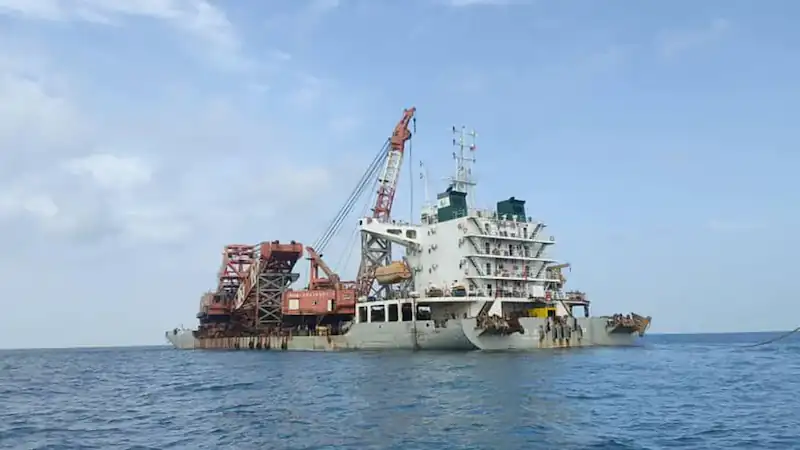


Malaysian authorities have reportedly detained a Chinese-flagged cargo ship amidst reports of the pillaging of World War II shipwrecks that lie in Malaysia's exclusive economic zone. According to the Bernama news agency, the ship was seized and boarded after being found to have no authorisation to anchor in the Malaysian waters. An inspection of the cargo revealed old steel and cannon shells, which were suspected to have originated from the wrecks of two British warships that sank during a Japanese air raid in 1941. The area in question is home to the wrecks of the battleship HMS Prince of Wales and the cruiser HMS Repulse, which are classified as war graves in the UK.
While it is not a new problem, salvaging of sunken World War II wrecks around the Pacific is considered a serious issue. In 2017, Dutch, British and US authorities reported that naval vessels located in the World War II Battle of Java Sea had been salvaged without permission. Two Dutch cruisers and two British ships disappeared without a trace, while reports indicate that steel from World War II shipwrecks can have special value, as it was produced before the first nuclear warhead explosions on Earth. Known as "low-background steel," it is used in some scientific instruments because it contains no traces of nuclear fallout.
The pillaging of the warships has been widely condemned and viewed as vandalism for personal profit. According to John Bradford, a senior fellow at the S. Rajaratnam School of International Studies in Singapore, "Many view it as robbing the graves of national heroes rather than reclaiming scrap." Meanwhile, the legal regime around the wrecks of warships and state-owned ships remains complex, fractured, and in need of clarification, according to a 2017 report from the Peace Palace Library at the Hague in the Netherlands.
The sinking of the HMS Prince of Wales and HMS Repulse is considered one of the worst naval disasters in the history of the Royal Navy. The Japanese planes attacked the British ships from airstrips around the region, while there was no British air cover for the two surface ships, after an aircraft carrier that was supposed to provide backup had run aground during its voyage to the Pacific. The sinking of these two powerful modern warships without supporting air power contributed to the development of naval aviation strategies that persist today.