


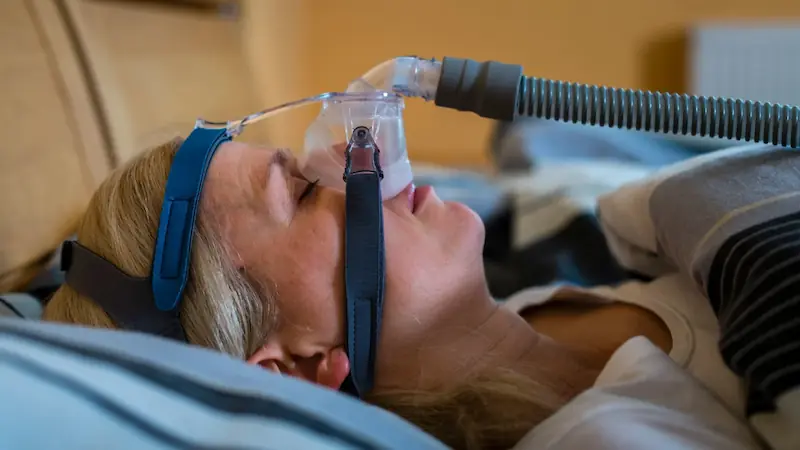


A recent study has found a link between severe sleep-disordered breathing, which includes heavy snoring and sleep apnea, and a decrease in the volume of the medial temporal lobe in the brain. This region of the brain is essential for memory and recall of facts and events, and the hippocampus, a complex structure critical for learning, memory encoding, and consolidation, is buried deep in this area.
The study found that the loss of volume in the brain only occurred when a person also had signs of beta-amyloid plaques, which are a hallmark sign of Alzheimer’s disease. Amyloid buildup in the brain can start decades before any clinical signs of cognitive decline, and the deposits do not necessarily result in Alzheimer’s disease, as many older people have evidence of extensive amyloid in their brains and do not develop Alzheimer’s.
During sleep, especially deep, slow-wave sleep, the brain clears away much of the amyloid buildup in the brain. However, people who snore heavily or have sleep apnea can experience hundreds of mini-arousals per night, negatively impacting their ability to get a sufficient amount of deep sleep.
It is estimated that 936 million adults worldwide between the ages of 30 and 69 may suffer from sleep apnea, with many more people undiagnosed. Severe sleep apnea, if untreated, can increase the risk of dying from any cause threefold, and it is also associated with worrisome changes in the brains of middle-aged and older adults, potentially leading to nerve cell loss and cognitive decline.
The recent study, published in the journal Neurology, examined data collected on 128 people over the age of 65 participating in Age Well, an ongoing randomized clinical trial in France. The study found that people in the very early stages of the Alzheimer’s continuum with sleep apnea were vulnerable to a specific loss of volume in the brain, and further studies should look at whether treating sleep-disordered breathing could potentially improve cognition and prevent or delay neurodegeneration.
Overall, studies such as these reinforce the need to be assessed by a sleep specialist and treated for sleep apnea. By working with a physician and keeping the brain healthy and clear of amyloid deposits, people can potentially delay or prevent nerve cell loss and cognitive decline.