


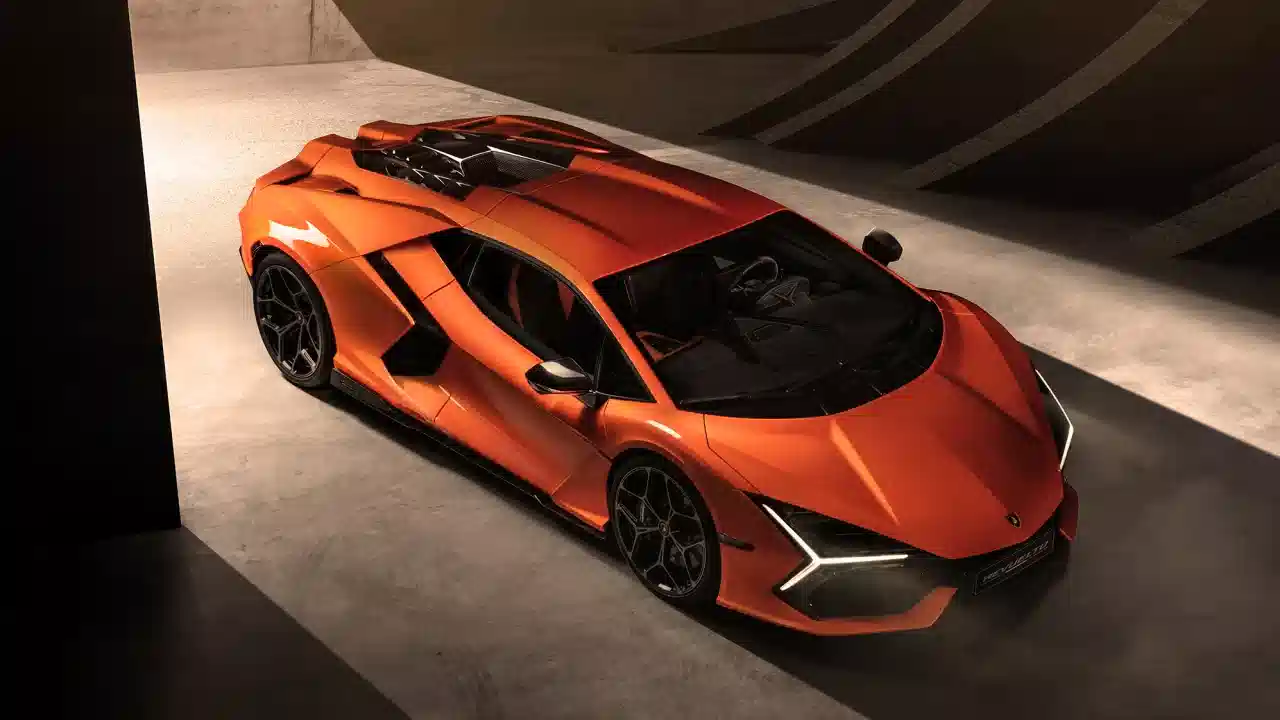


Lamborghini has broken with tradition by unveiling its first-ever supercar with a charging port, marking the end of 50 years of V12 gasoline-powered cars. Named the Lamborghini Revuelto, the vehicle is a plug-in hybrid, with a V12 gasoline engine and three electric motors that can produce a combined output of 1,001 horsepower. The car offers a range of driving modes, from silent electric cruising to high-powered track driving with the gasoline engine and electric motors working in tandem. Unlike previous Lamborghini V12 models, the Revuelto's engine points towards the back, while two electric motors power the front wheels, enabling all-wheel-drive and torque vectoring.
Luxury Italian sports car manufacturer Lamborghini has revealed its first supercar with a charging port, marking the end of 50 years of V12 models powered solely by gasoline. The Lamborghini Revuelto is a plug-in hybrid car with a V12 gasoline engine and three electric motors that together can produce 1,001 horsepower. The car features a range of 13 different drive modes, and front-wheel-drive low-speed cruising will be fully electric while high-powered aggressive track driving will employ all available power from the V12 engine and electric motors. The plug-in replacement for the less expensive V10-powered Huracán will be announced later, while the Urus SUV will also become a plug-in hybrid, but it will not be replaced with an entirely new model.
According to Lamborghini CEO Stephan Winkelmann, the upcoming V12 Revuelto and V10 Huracan replacement will be manufactured on the same assembly line at the company's headquarters. Currently, the two models are built on separate production lines inside the same factory building. The two new supercars will also share more components with each other than they do now, but Winkelmann stated that these measures will not offset the increased cost of the transition to plug-in hybrid power. The Urus SUV, which is produced in much larger numbers than the supercars, will continue to be manufactured in a separate factory. The additional floor space resulting from the production of the plug-in hybrid supercars on a single assembly line could be used for Lamborghini's next model, a fully electric four-seater expected to be unveiled in 2028. Winkelmann has stated that an electric Lamborghini supercar is currently impossible due to the weight of the batteries, given current battery technology.