




Chancellor Rishi Sunak has suggested that he may delay or revise environmental policies if they result in direct costs for consumers. This comes as pressure mounts within the Conservative Party to reevaluate the government's approach to climate issues following last week's elections.
Sunak affirmed the government's commitment to achieving the net zero target by 2050, but emphasized the need for a pragmatic and proportional approach that does not burden people with additional costs and inconveniences. The Conservative Party has long been divided on environmental matters, with critics accusing Prime Minister Boris Johnson of lacking enthusiasm for climate policies. However, the voices of climate skeptics within the party are gaining traction, especially as concerns about rising inflation and living costs intensify.
Prominent Tory MPs, including former Business Secretary Jacob Rees-Mogg, have seized upon the election results to call for a reevaluation of net zero policies. They have proposed a postponement of the 2030 ban on new petrol and diesel car sales and the removal of green levies on energy bills. The unexpected Conservative victory in Johnson's former seat of Uxbridge and South Ruislip, where the expansion of London's Ultra Low Emission Zone (ULEZ) was a key issue, has further fueled demands for scaled-back green promises to secure broader electoral support.
It is worth noting that the ULEZ program primarily targets air pollution rather than climate change. The government's handling of environmental protection should not be viewed as a "religious crusade," according to Levelling Up and Housing Secretary Michael Gove. Nevertheless, any attempt to dilute net zero policies may clash with the government's legally binding commitment to eliminating the UK's contribution to global warming by 2050.
Last year, ministers faced a significant setback when the High Court ruled that an earlier version of the Net Zero Strategy did not provide sufficient detail on meeting the emissions target. To uphold the 2050 commitment, the government is required by law to establish five-year carbon budgets 12 years in advance, outlining the steps to achieve net zero emissions.
Watering down the ban on petrol and diesel cars could also raise doubts about the government's industrial strategy. The 2030 deadline was a contributing factor in Tata Group's decision to invest £4 billion in a new electric vehicle battery plant in the UK. The government has expressed its desire to attract more gigafactories to the country, but backtracking on a policy that promotes electric vehicle adoption may discourage investors.
Despite these considerations, the Conservative Party's push to reevaluate the environmental agenda continues to exert pressure on Sunak. This is happening even as he faces criticism from former climate minister Zac Goldsmith, who accused the UK of abandoning its leadership in climate and nature protection under Sunak's watch.
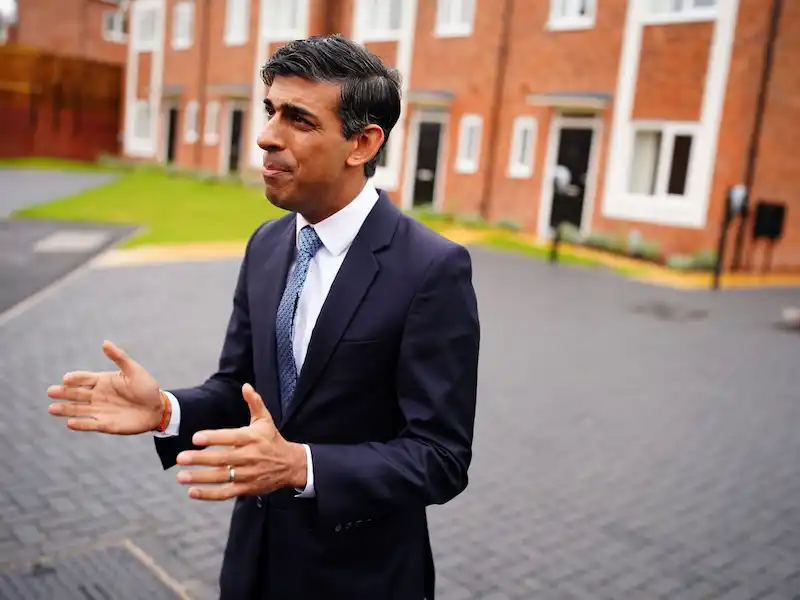
Speaking during a visit to the West Midlands, Sunak acknowledged the importance of achieving net zero but also highlighted the current high levels of inflation, which are affecting household bills. He expressed a desire to avoid contributing to the financial burden on families and instead wants to make things easier for them.