


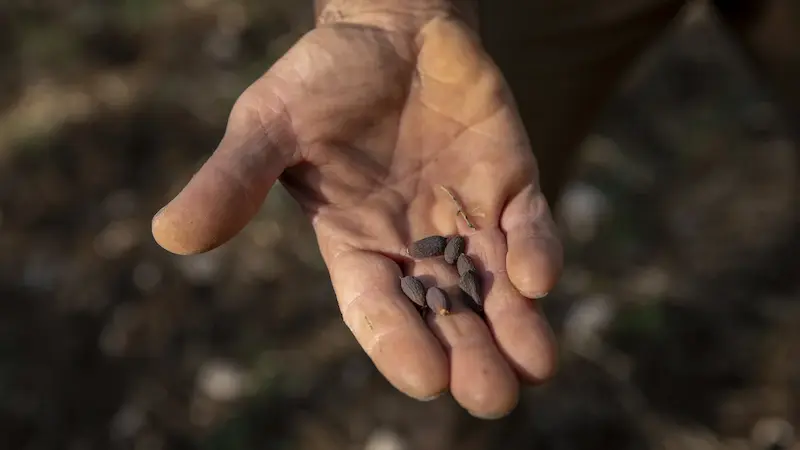


The olive oil industry is currently grappling with a significant crisis as scorching temperatures and extreme drought conditions sweep across southern Europe this summer. Not only are these weather conditions leading to loss of lives and increased fire risks, but they are also taking a toll on olive trees, which could result in skyrocketing prices and potential shortages of olive oil.
When temperatures soar, olive trees tend to drop their fruit in order to conserve moisture or produce fruit at the expense of the tree's health. This phenomenon is particularly detrimental during the spring when flowering occurs. With the high temperatures witnessed this summer, the situation becomes even more alarming, especially following a poor olive harvest last year in the wake of Europe's hottest summer on record.
Spain, the largest producer of olive oil globally, experienced a drastic decline in production, plummeting to roughly 620,000 metric tons compared to the five-year average of around 1.3 million metric tons. This substantial shortfall from the previous harvest has created added pressure on an already struggling industry.
Heatwaves have gripped various parts of the Mediterranean region, bringing what scientists refer to as a "heat hell" that is likely intensified due to climate change. Spain, Italy, and Greece, significant olive oil producing countries, have all been affected by these extreme weather conditions. The full extent of the damage to olive trees won't be known until after the harvest season in October and November, but industry experts predict that European olive oil production could decline by more than 30%, equivalent to a reduction of 700,000 metric tons compared to the five-year average.
As a result of these factors, bulk prices for olive oil have already doubled compared to the same period last year. There are strong indications that a shortfall in the upcoming harvest is inevitable. Walter Zanre, CEO of Filippo Berio UK, one of the world's leading olive oil brands, warns that the industry is currently in crisis with little relief in sight.
While the International Olive Council has not explicitly labeled the situation as a crisis, a spokesperson acknowledged the complex challenge faced by the industry due to climate change. Globally, olive oil production is projected to decline by 20% between October 2022 and September 2023. The impact of these developments on consumers remains uncertain. As prices continue to rise, the key question will be whether consumers will continue purchasing olive oil at these elevated prices or opt for alternative oils.
The adverse effects of extreme heat on food production extend beyond the olive oil industry. Corey Lesk, a climate researcher at Dartmouth College, emphasizes that crops are highly vulnerable to extreme heat due to water stress caused by a combination of dry soils and a thirsty atmosphere. Italy, for instance, has already experienced detrimental effects on various fruit crops, with cherry harvests down by around 60%, peaches and nectarines estimated to decrease by about 30%, and apricots by 20%. Tomatoes have also been affected by hail and scorching sun.
The consequences of climate change on farming are being witnessed globally. Lorenzo Bazzana, economic manager for Italian farmers association Coldiretti, confirms the disruptions faced by Italian farmers due to heat, droughts, and floods. While measures are being taken to mitigate the damage, extreme weather events like tornadoes and hailstones the size of oranges pose significant challenges.
Food production in the United States, particularly in the South and West, is also under threat. Nicholas Paulson, a professor at the University of Illinois Urbana-Champaign's agricultural school, warns of the impact on primary crops such as wheat, cotton, corn, and soybeans as a result of the combination of heat and dry conditions.
Experts anticipate that the severity and frequency of extreme weather events will worsen due to the human-induced climate crisis. This changing risk profile poses a significant challenge for farmers and threatens the global food system. While the food system has demonstrated resilience thus far, climate risks are escalating at a faster rate than predicted by models. This indicates that we may be on the cusp of game-changing risks that could potentially push the global food system to the edge in the coming years.
Overall, the olive oil industry's current crisis is just one example of the broader challenges faced by agricultural sectors globally. The impact of extreme heat on crops is a pressing concern that highlights the urgent need for proactive measures to address climate change and ensure food security for the future.